
Check out the audio podcast version of this post on Apple Podcasts or Spotify.
Do you ever wish you could study with one of the top jazz musicians in the world without paying a huge tuition bill or needing to pass an audition at a prestigious music school?
Now you can.
In this article, we’re sharing insights from saxophone legend Eric Alexander’s newest BetterSax course – How I Improvise, where he reveals the exact strategies that separate great soloists from everyone else.
Like many players, I used to think that just a few lessons with one of my heroes would finally unlock the secrets of great improvisation. And after working with world-class musicians like Eric, I’ve learned that’s absolutely true.
The advice that truly moved the needle for me didn’t come from a book. It came from listening to professionals explain what they actually practice, and more importantly, why.
Eric has been one of my favorite saxophonists for years. His previous BetterSax courses were already packed with value, but this new course takes things further.

I asked him the questions every jazz student wonders about: How did you develop that killer tone? How do you play so fast? What do you really practice?
Eric shared unfiltered, real-world answers and then demonstrated each concept through full improvised solos over jazz standards. After that, he walked through each solo measure by measure, explaining exactly what was going through his mind and why he chose each phrase.
What follows are some highlights from the course, key moments that reveal how jazz pros like Eric Alexander approach the saxophone, and how you can start doing the same.
Saxophone Sound
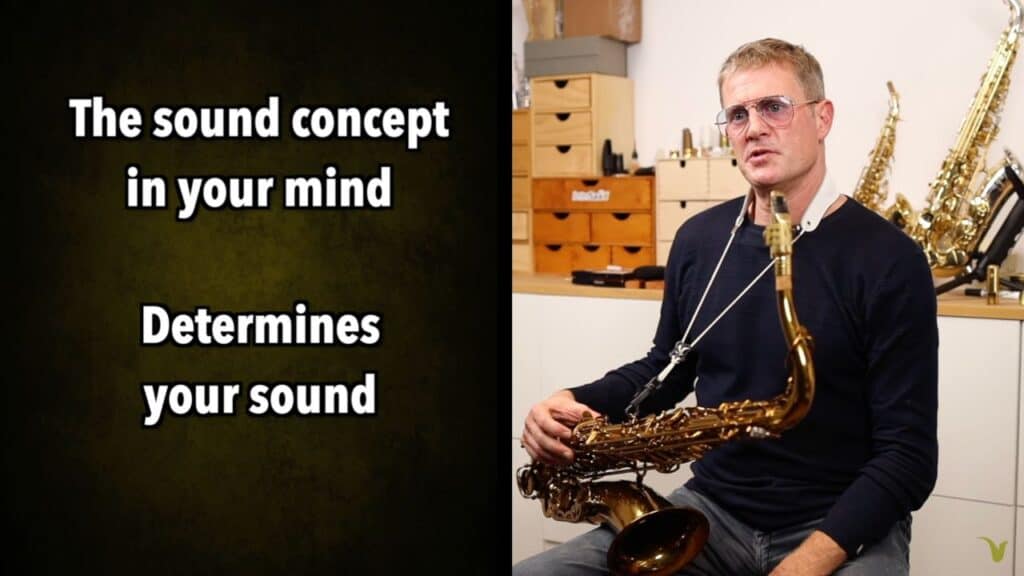
When Eric talks about saxophone sound, one of the first things he emphasizes is how your concept, what you imagine your tone to be, is the single most important factor in how you’ll actually sound.
Just practicing long tones until your face gets tired, might build some strength, but without a clear tonal goal in your mind, it won’t do much to improve your sound.
Instead, Eric encourages players to chase after a specific sound. Maybe you want to sound like John Coltrane in 1959. Go for it. Even if you never get there exactly, the process of reaching for an ideal helps you find your own voice.
More importantly, he says to find a way of playing the horn that feels natural and comfortable for you. That’s the key. The automatic result of that search is discovering your unique sound, because no two players have the same body, embouchure, or setup.
Play Fast
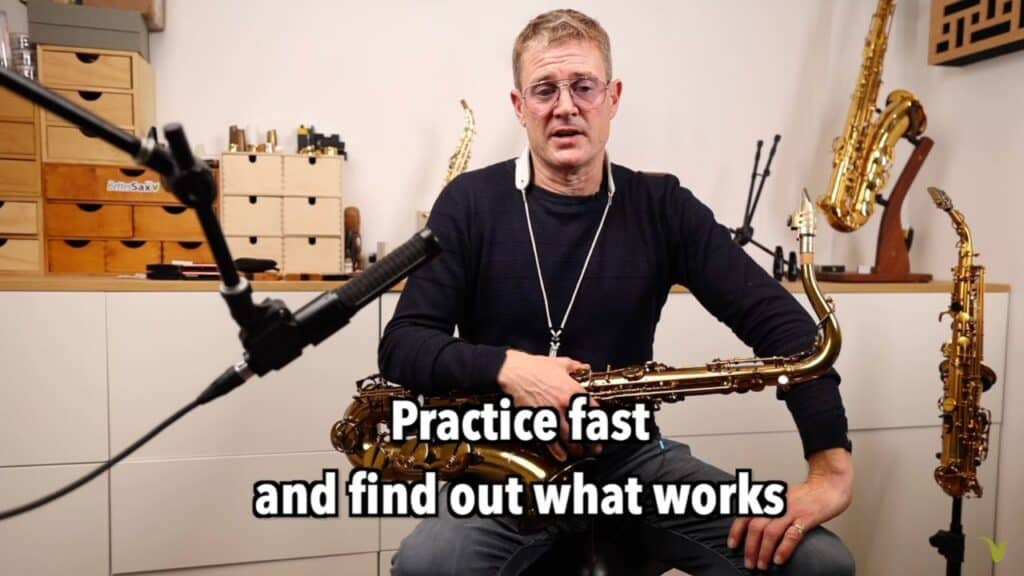
Eric gets asked about playing fast all the time, and the truth is simple: he practiced fast.
He also made sure to practice the kinds of tunes that are typically played at fast tempos. That forced him to figure out what kind of musical language actually works in that context.
Generally, that means more diatonic, stepwise motion, things that flow scalewise. You won’t hear series of fourths or wide interval leaps at extreme tempos, because that approach doesn’t suit fast harmonic movement.
The key? You have to practice fast. And just as importantly, you have to experiment with what phrases actually work at those speeds.
Versatility of Diminished Scales
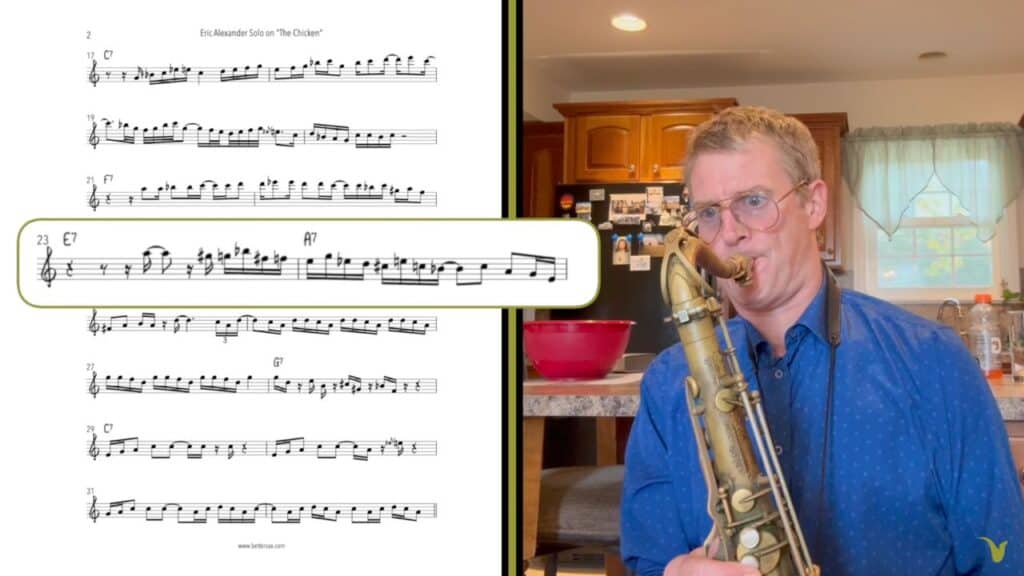
When Eric plays over an A7 chord and decides to use the diminished scale sound, every single note becomes fair game.
The diminished scale is almost a perfect mode, maybe the most perfect mode, because every note works.
Once that decision is made, he has endless options for phrasing. He could have gone one direction or another, but it’s all valid because the sound and structure of the diminished scale supports the freedom.
This kind of creative decision making is what makes a solo stand out, and understanding the flexibility of the diminished scale is a big step toward that.
Coltrane’s Major Triad Trick
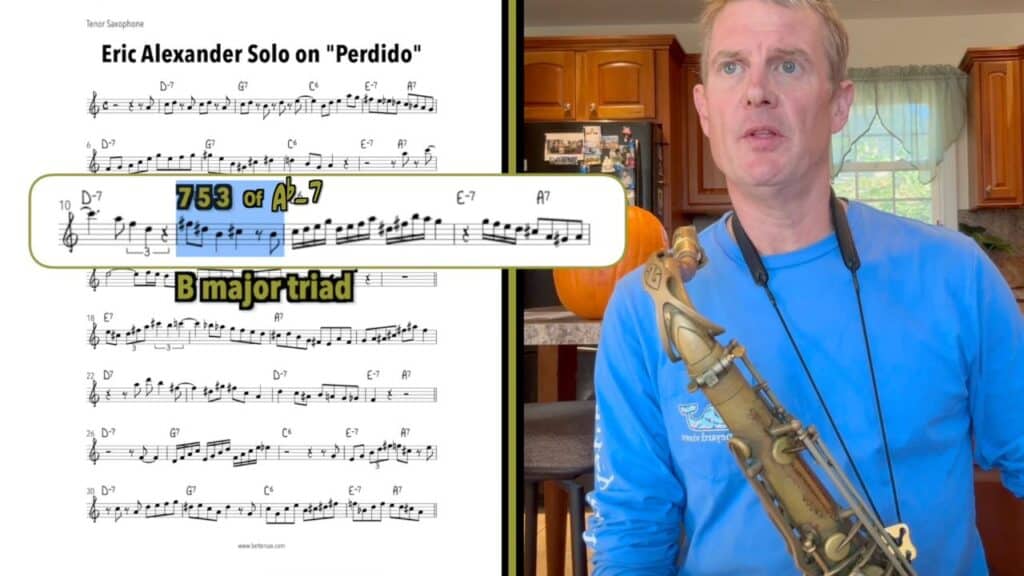
Eric highlights a particular technique he used over a G7 chord, one he learned while still in college.
He recalls hearing Coltrane play something similar and thought it was cool to play a B major triad over G7. Later, he understood that this actually outlines the seventh, fifth, and third of a tritone substitution (Abm7 over G7).
So over a ii – V in the key of C (Dm to G7), you could play F#, D#, B, the seventh, fifth, and third of Abm7. That’s the tritone two.
This material has been giving me endless ideas and inspiration for things to practice and ways to improve my own playing. It really is the kind of information I always wanted access to as a student.
Now all that’s left to do is get to work.
But what if you’re more of an intermediate player and need to focus on the basics before diving into advanced material like this?
Go read this article next, where I walk you through the essential practice routine that will make your solos sound more legit right away.