
Get the PDF Download to this lesson here.
If you don’t want your soloing to sound like boring scale practice, there is one critical element you need in your jazz playing. Unfortunately, most beginners miss this completely.
In this article, I am going to show you the practice routine that will immediately get you playing more authentic jazz lines so your solos sound like the real thing, even if you are new to jazz improvisation.
I made a free PDF download for you, transposed for alto and tenor saxophone. Click here to download it and start practicing this right away.
Let us start with the most common chord progression in jazz, the ii V I in concert Bb.
We are going to begin with a simple descending triad over each of these chords, like this:
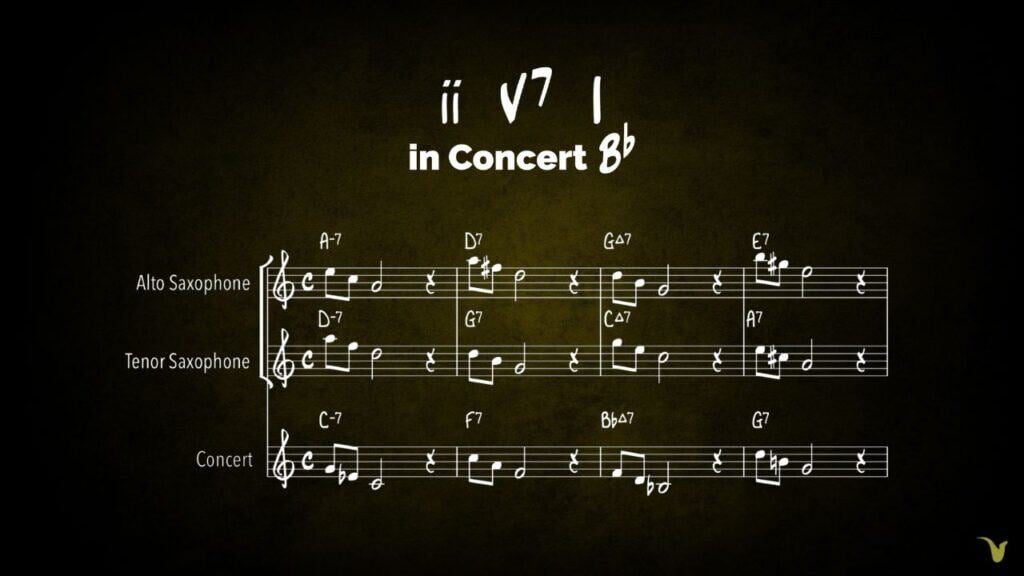
I am about to show you ten basic ways to embellish notes in jazz. Each one of these gets used all the time, and learning how to do this literally makes the difference between sounding okay and sounding killer.
This is not just for jazz either. Everything you are about to see can be used in every style of music to make what you play sound more interesting and sophisticated.
Embellishment 1
Chromatic Approach Tone from Below
We are just going to apply it to the first note of our triad each time, like this:
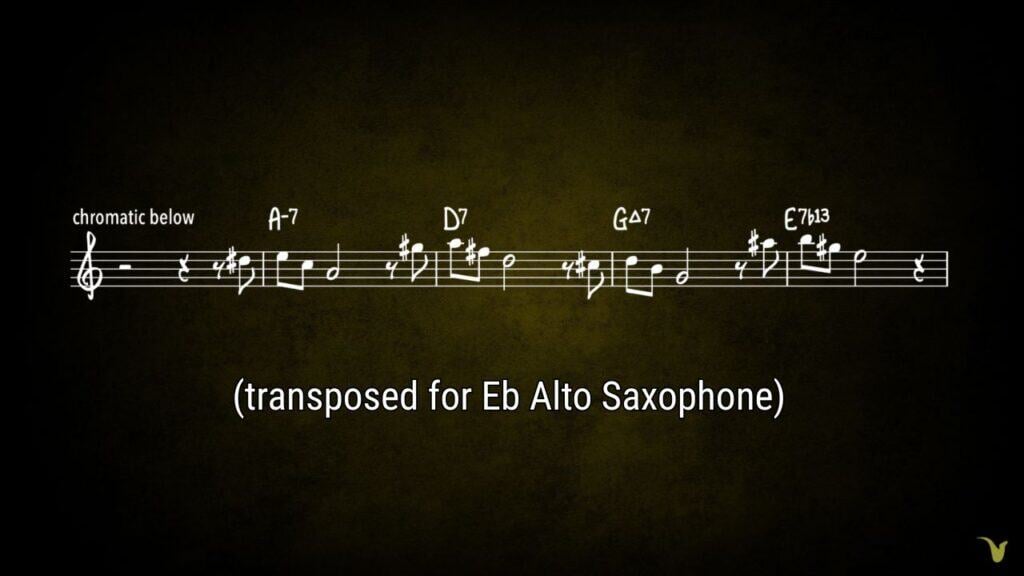
You can add a chromatic approach tone from below anywhere you want in music and it will probably work.
Embellishment 2
Diatonic Approach Tone from Above
The next embellishment is a diatonic approach tone from above. That just means a note from the scale of the chord.
So our first chord is C minor seven and our note is G. So the next note above that in the scale is A, and the whole thing looks like this:
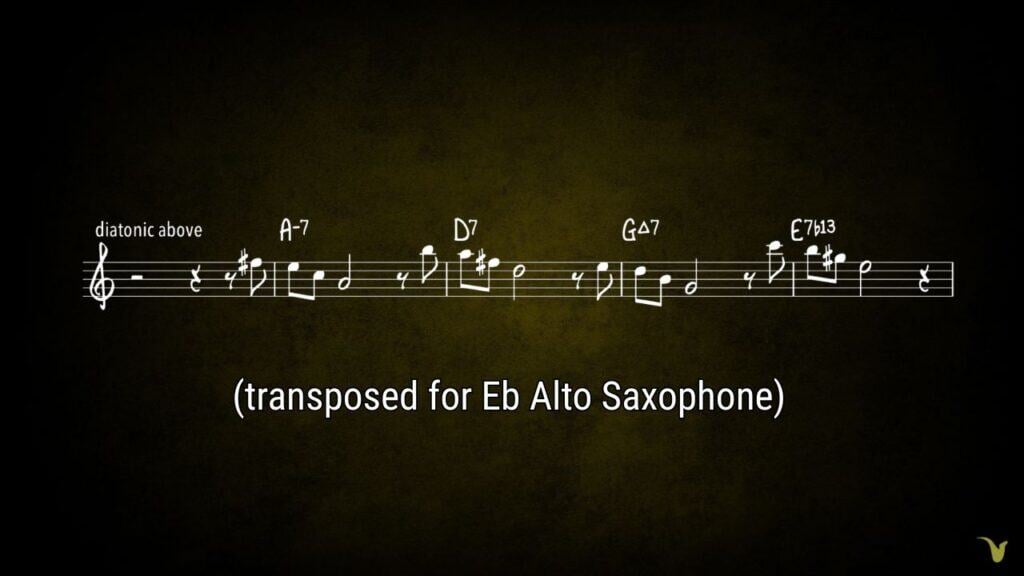
So far, this is super simple.
Embellishment 3
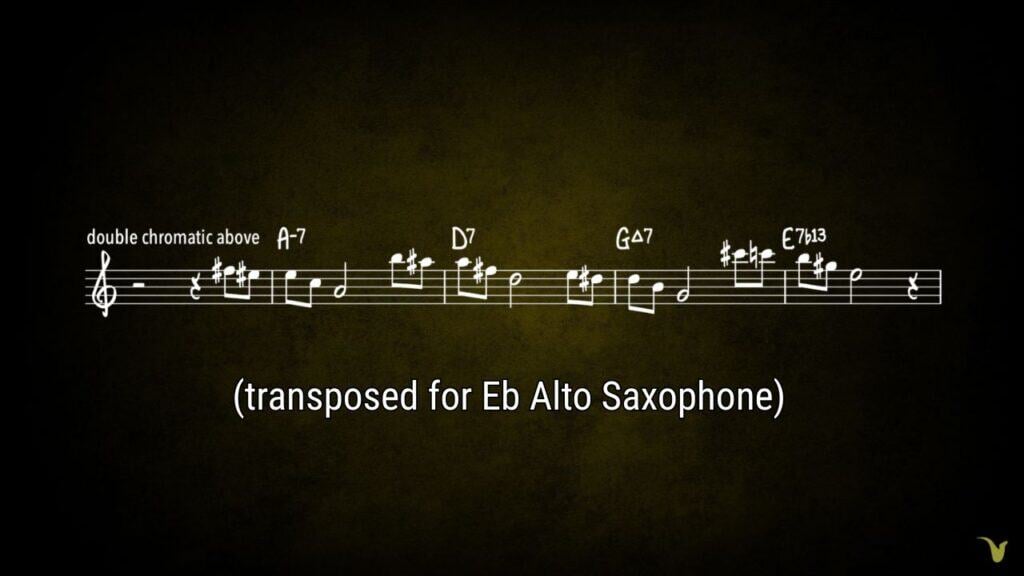
Double Chromatic Approach Tones from Above
Let us move to the next one, which is double chromatic approach tones from above. It looks like this:
Embellishment 4
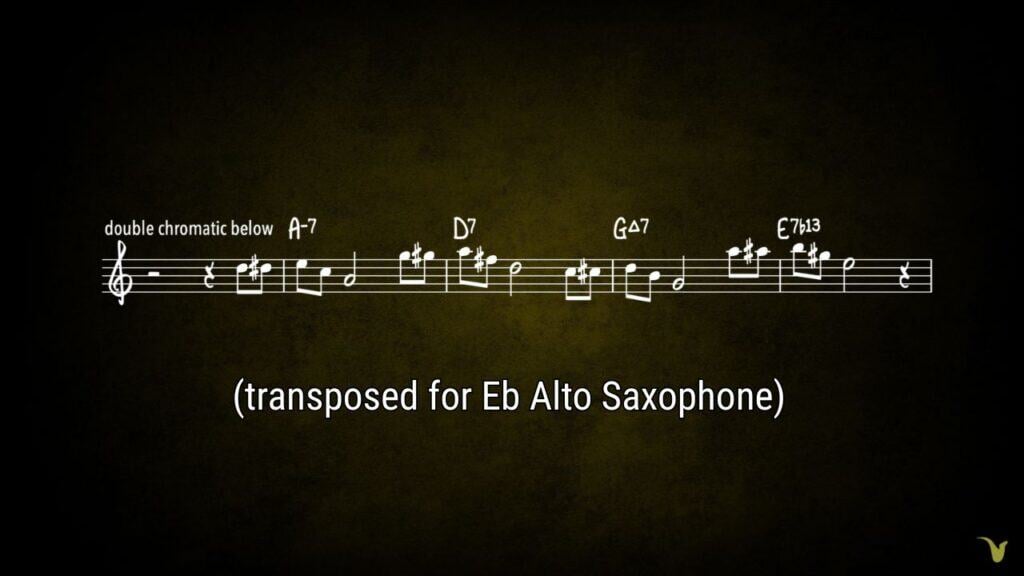
Double Chromatic Approach Tones from Below
As you may have guessed, we can do the same thing from below. Here are double chromatic approach tones from below:
Embellishments in Context
All of these are easy to do and can be applied to improvisational language as well as song melodies.
For example, here is how the first four embellishments looks like when applied to a jazz standard: Just Friends
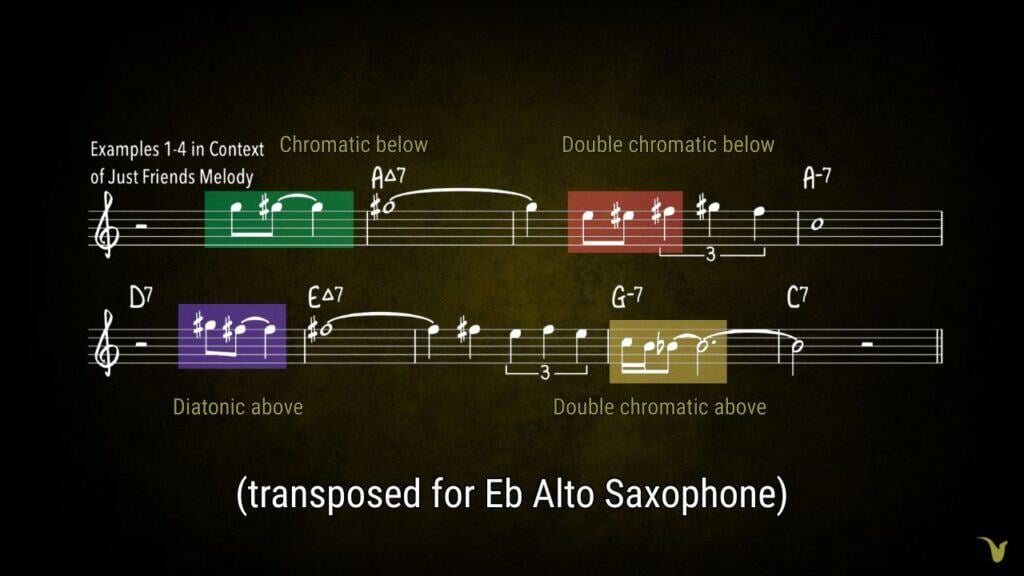
If we combine these first four embellishments by adding notes above and below our target note, we get what we call enclosures.
The first two are simple enclosures, where we combine an upper and lower approach tone.
Embellishment 5
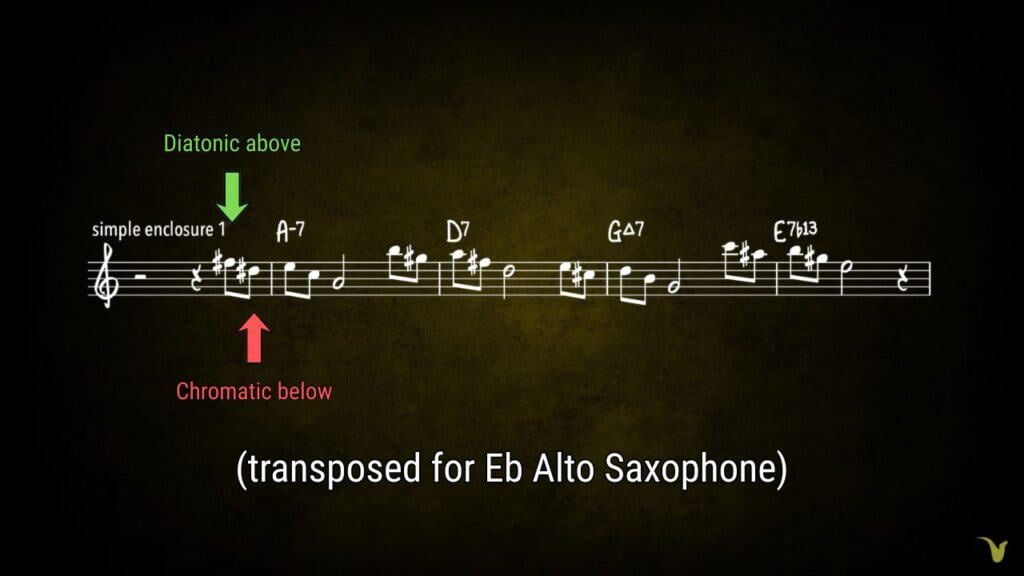
Simple Enclosure 1
This one is diatonic above, then chromatic below, and it sounds like this:
Embellishment 6
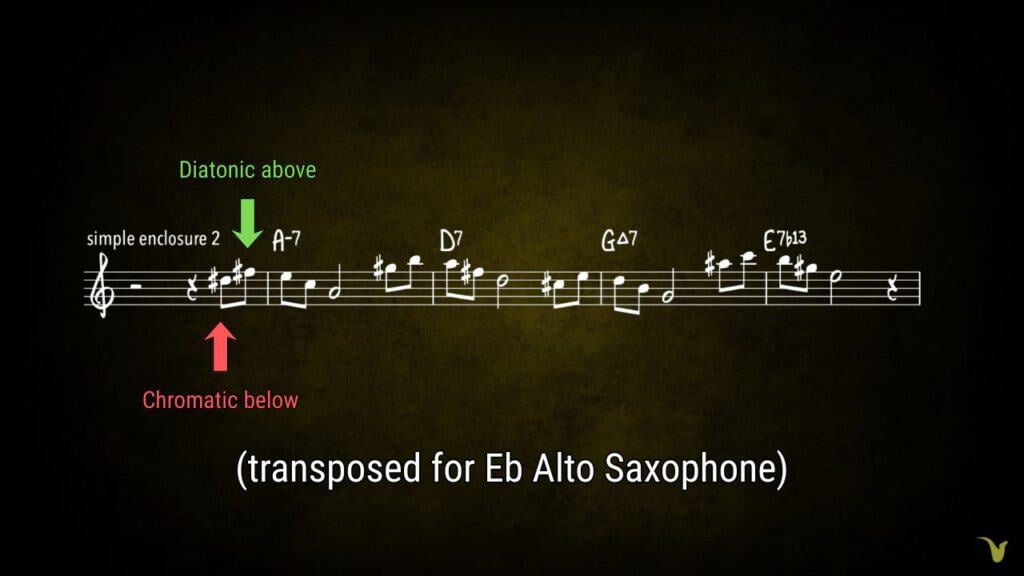
Simple Enclosure 2
Now we flip it around and get chromatic below and diatonic above, like this:
Before we move on, it is worth mentioning that we recently started offering a free trial to the BetterSax Membership, where you get access to a huge library of lessons from me, along with courses from world class players and teachers like Eric Alexander, Vincent Herring, Adam Larson, Bob Faub, etc.
If you want to get really good at playing the saxophone while having fun and staying super motivated, click here to start your free trial now.
Embellishment 7
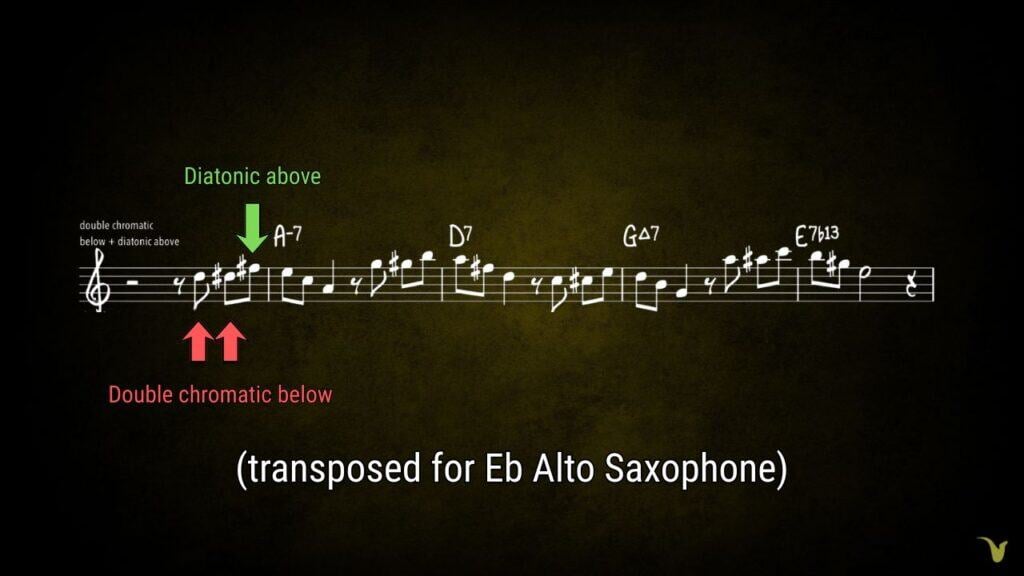
Complex Enclosure 1
Our first more complex enclosure combines double chromatic approach tones from below with a diatonic one from above, and it looks like this:
Embellishment 8
Complex Enclosure 2
Pretty cool, right? Let us flip that one around so the double chromatic approach tones are above and the single chromatic approach tone is below:
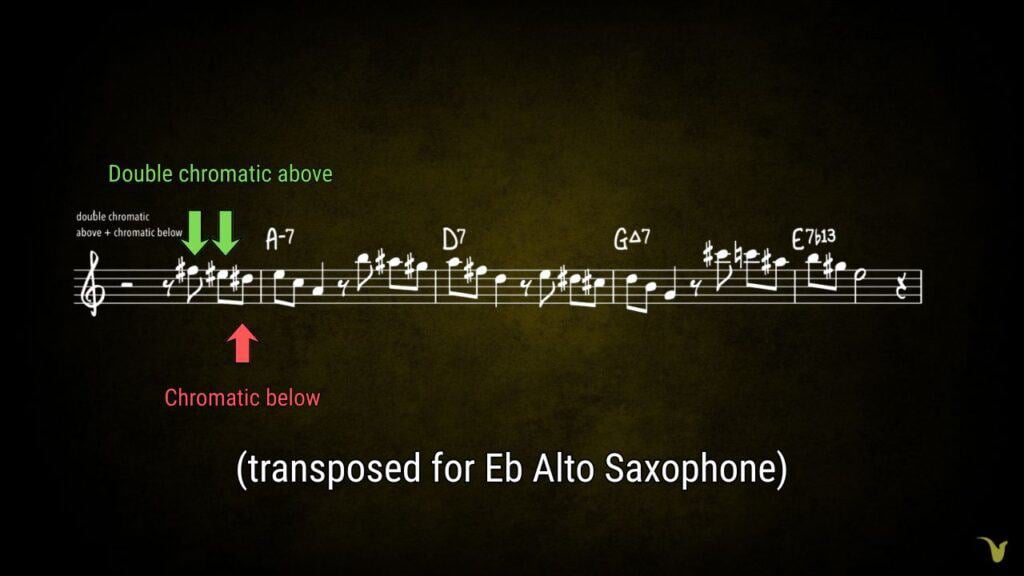
These last two are where the magic really happens. Make sure you download the free PDF so you know exactly what to play.
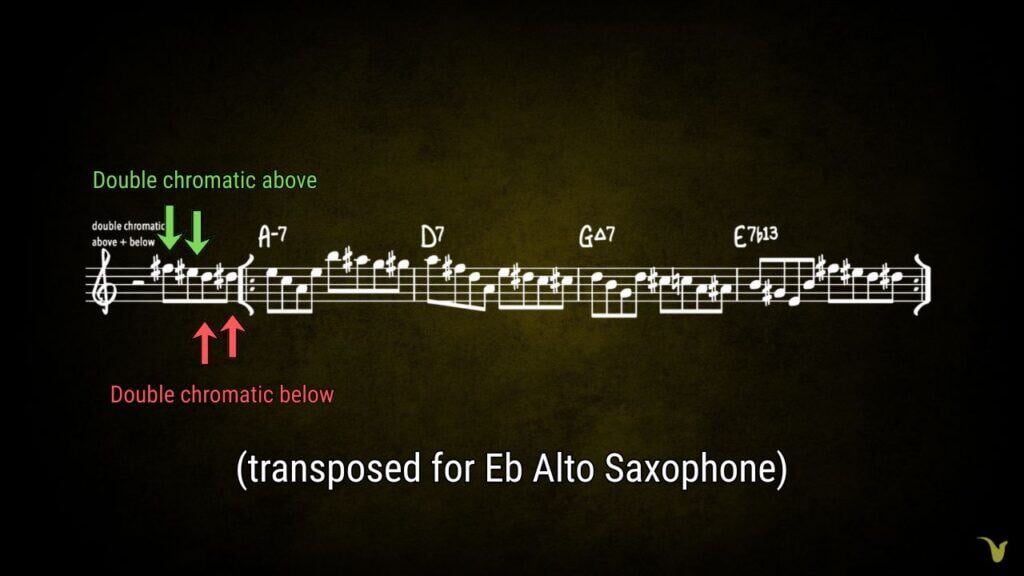
I also added another note so the exercise becomes a steady stream of eighth notes that you can loop continuously.
Embellishment 9
Double Chromatic Above Then Below
First, we have double chromatic approach tones above, then below, like this:
Embellishment 10
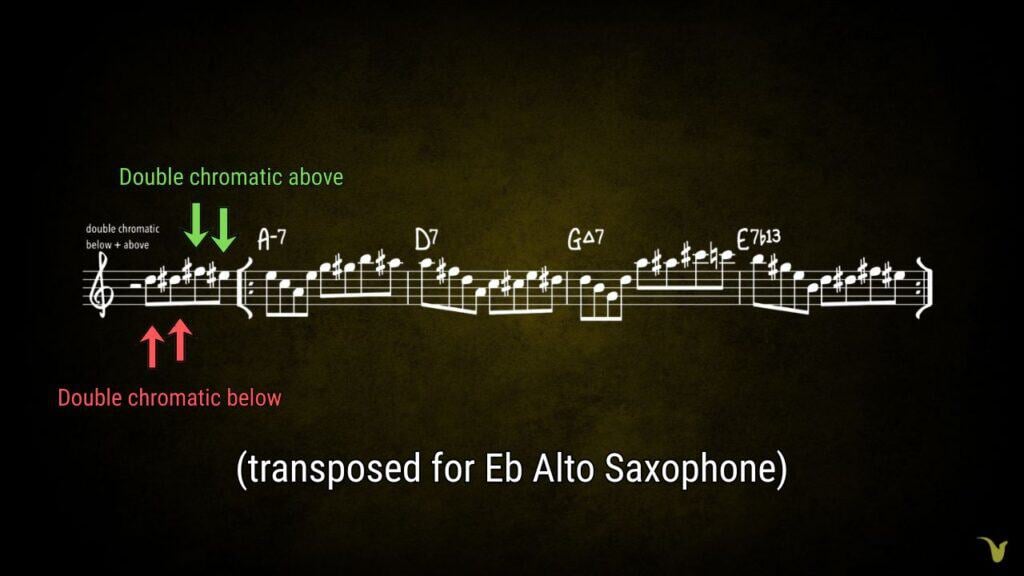
Double Chromatic Below Then Above
Finally, we flip it around and get double chromatic below, then above, like this:
Embellishments in Context
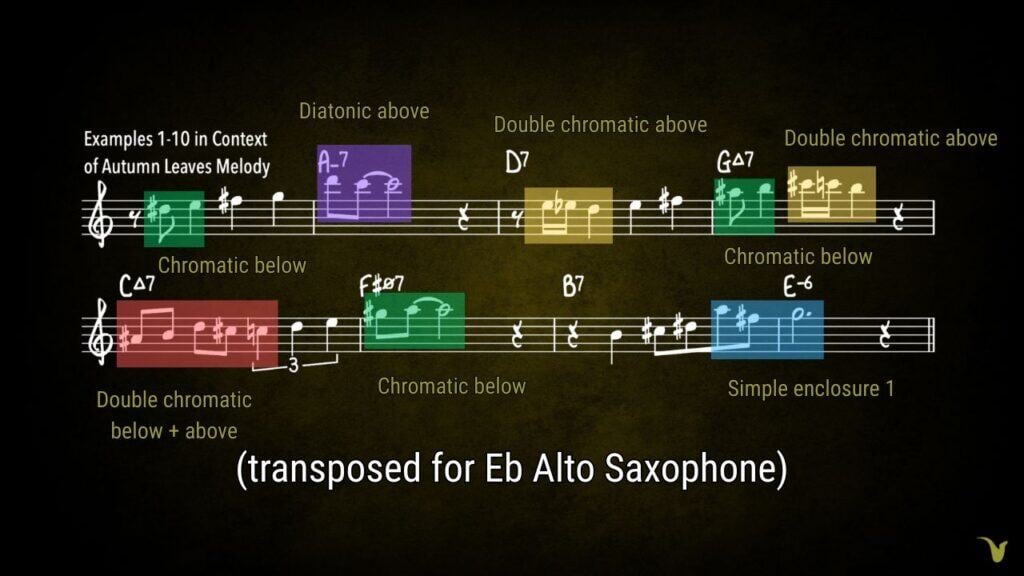
Once again, let us use these ideas in the context of a song.
Here is the melody to Autumn Leaves with each embellishment labeled where it is used:
For saxophone players, adding approach tones and enclosures to your playing gives you an enormous return on your practice time investment.
Go ahead and download the free PDF and start practicing this now. Once you have spent some time with it, go read this article next where I break down the three scales you actually need to know and how to practice them to get quick results for fast improvements in technique and soloing skills.