

Check out the audio podcast version of this post on Apple Podcasts or Spotify.
Do you ever feel overwhelmed by all the scales you’re supposed to practice on the saxophone? I’m going to let you in on a secret. You only need three for the vast majority of music you’ll ever play. In this article, I’ll show you which three scales matter most, and exactly how to practice them to boost your technique, supercharge your rhythm, and maximize your soloing skills.
Scale 1 – Major Scale
You probably already know this first one.
Here is the trick, though. Just by starting the plain old major scale on different notes, we get bonus scales. The way I am going to show you to practice will get you all the bonuses for free without doing any extra work. And to make everything even easier, I put this entire lesson into a PDF that you can download for free by clicking here.
Here is a really basic way to practice your major scale. The example is in concert F, which is the friendly key of D on alto and G on the tenor.
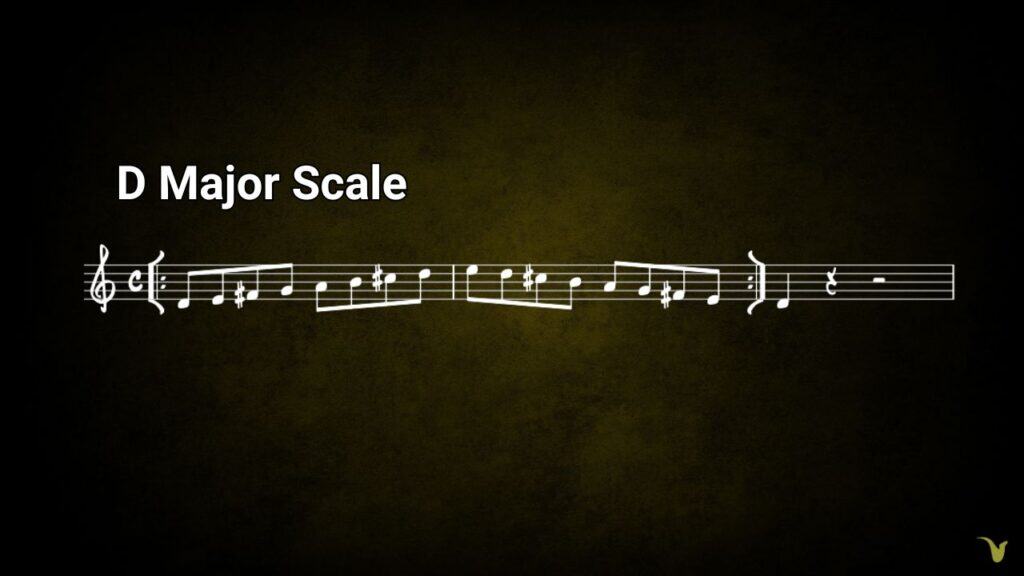
If we play the exact same pattern but start on the second note, we get this minor sounding scale which is called the Dorian mode. It sounds great on minor chords. And if we starts on the fifth scale degree, we get what’s called the Mixolydian mode. It fits perfectly over the dominant seven chords.
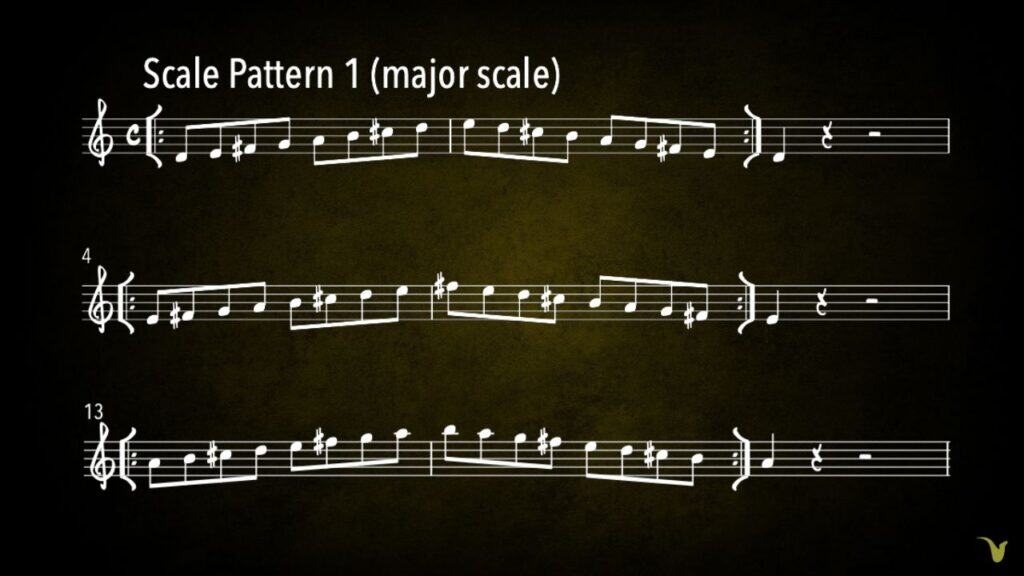
So, by practicing this pattern on each note of my major scale, I am not only boosting my technique and knowledge of the scale, I am also getting all the modes under my fingers and in my ears.
Here is an even more effective way to practice your major scale. And if you use a metronome, you are also developing your time feel, which is actually even more important than what scales you know. I call this the five note scale.
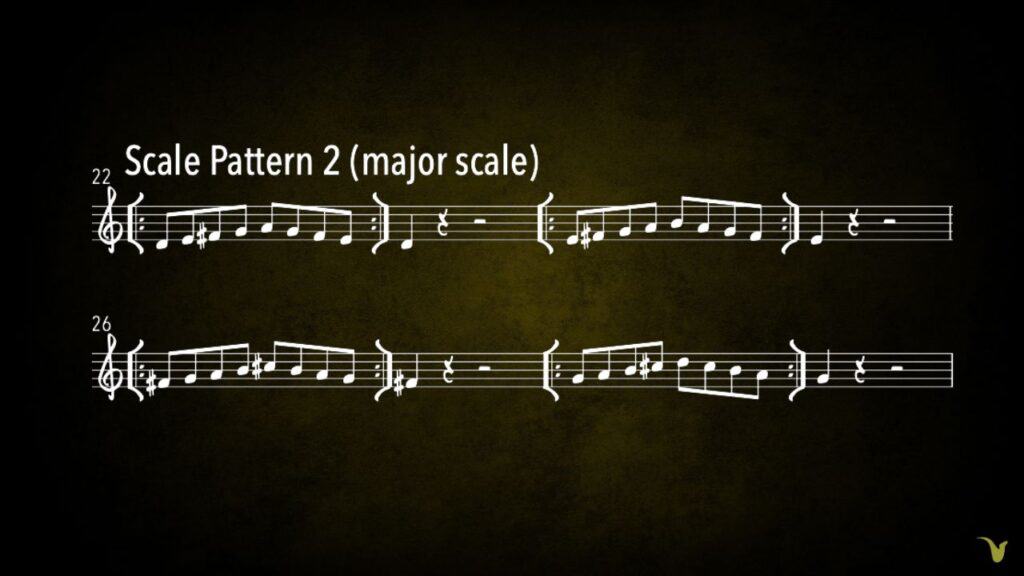
When you do this, make sure you go at a speed where you can play relaxed and accurately with no mistakes. Not only are we getting really good at playing our major scale, we are mastering all the direction changes that happen constantly in music.
Keep going, playing that five note pattern starting on each note of the scale.
Once you get these first two patterns down in one key, start working on them in other keys. I have had thousands of students make major progress on their saxophones by working on this stuff every day. After just a month of daily practice, your technique and rhythm will improve significantly and make everything else you play sound better. But there is another scale you must know, especially if you play any style of popular music, and that is the pentatonic scale.
Scale 2 – Major Pentatonic Scale
If you remove the fourth and seventh notes of your major scale you get a major pentatonic scale. It is only got five notes, hence the prefix.
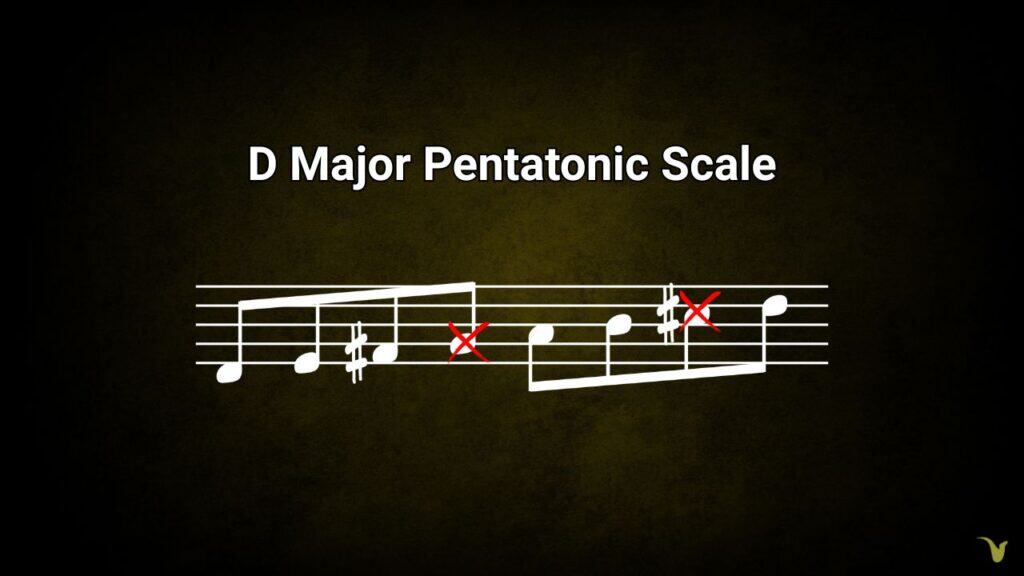
You can apply the exact same pattern I just showed you to your pentatonic scale, and it would be like this.
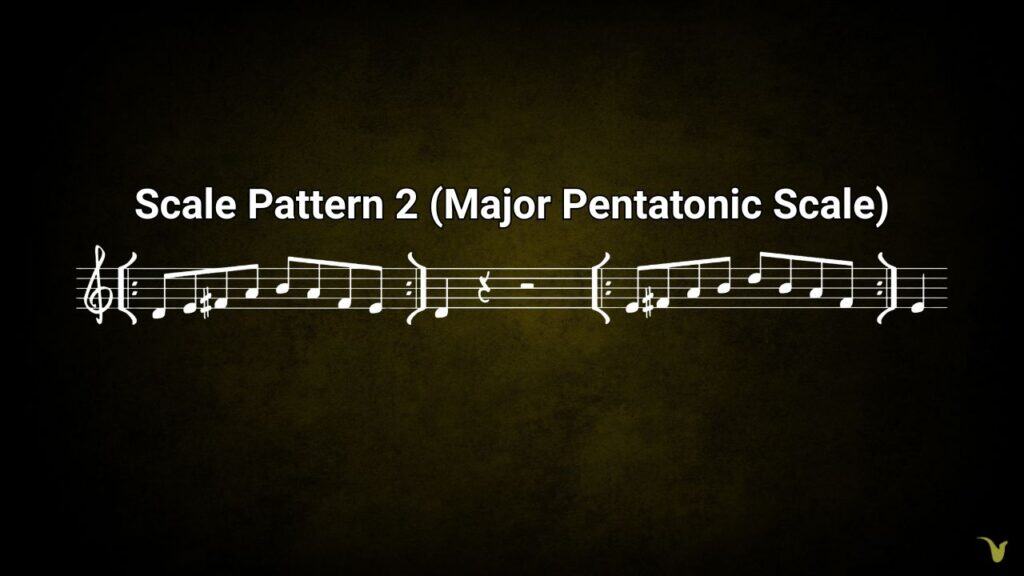
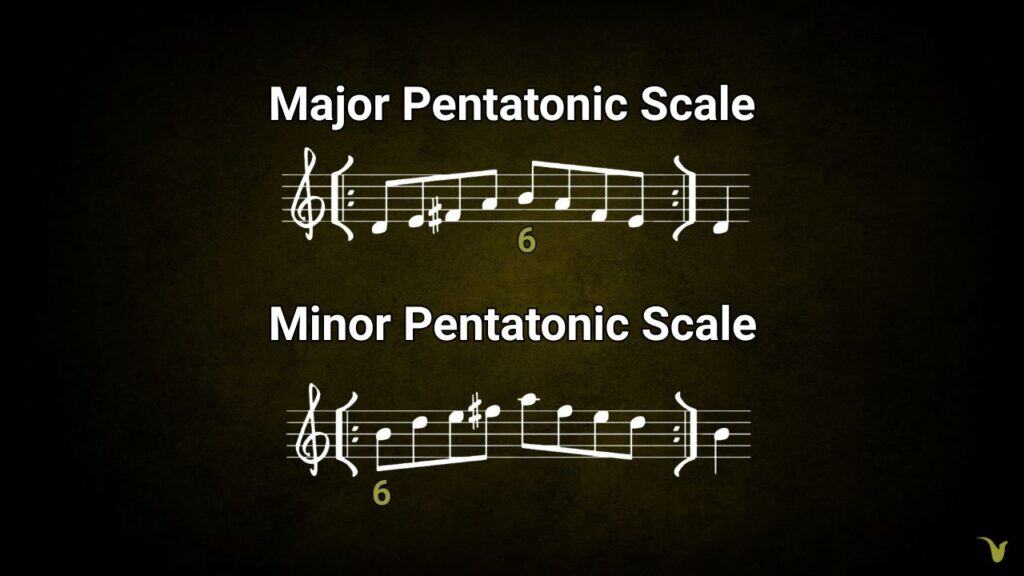
There is a great bonus scale inside that major pentatonic scale. If we start it on the sixth scale degree, we get our minor pentatonic scale as our bonus. Both of these get used constantly in every kind of popular music.
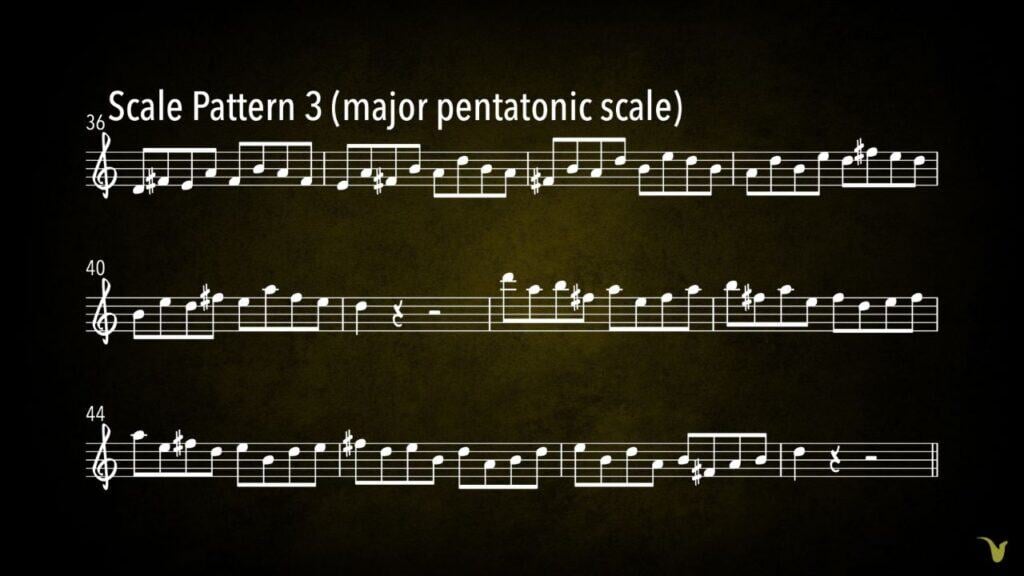
Now, practicing scales up and down is great, but notes are not always right next to each other in music. So it is very important that we practice patterns with jumps in them. This next scale pattern will help you master the pentatonic scale while getting comfortable with all those jumps.
Everything I have given you so far is a lot to work on and should keep you busy for quite a while, especially once you start applying these patterns to other keys. The major and pentatonic scales cover at least ninety percent of everything I have ever had to play on the saxophone in my professional career. And that is why it makes sense to focus our energy on learning those first, right? However, players that know how to use this next scale can really set themselves apart from those who don’t.
Scale 3 – Harmonic Minor Scale
I’m talking about the harmonic minor scale. Sounds complicated, but it is not. Starting from our major scale, we need to flatten the third and the sixth scale degrees to turn it into this harmonic minor scale.
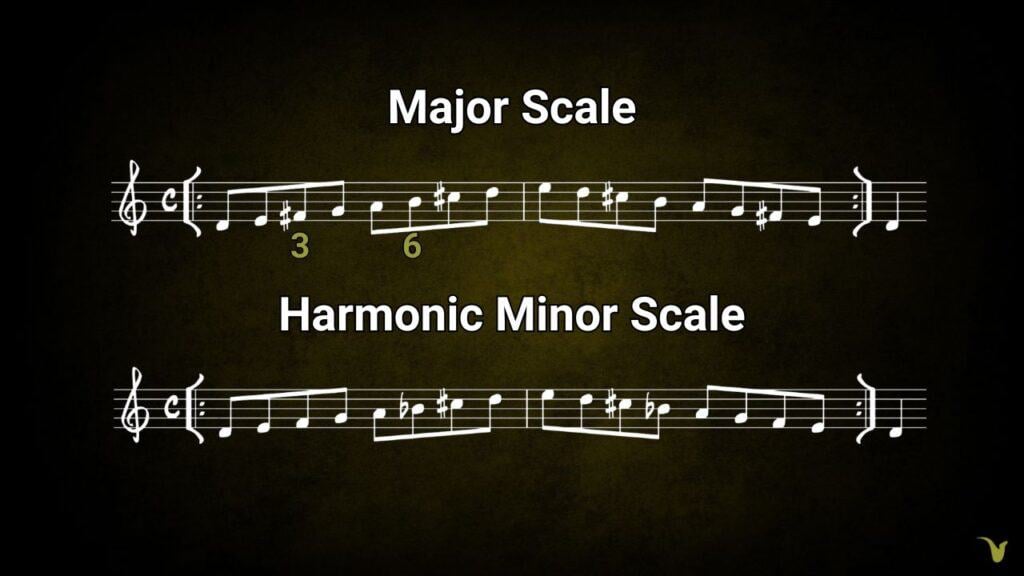
We can apply all three of the scale patterns we already learned to this harmonic minor scale like this.
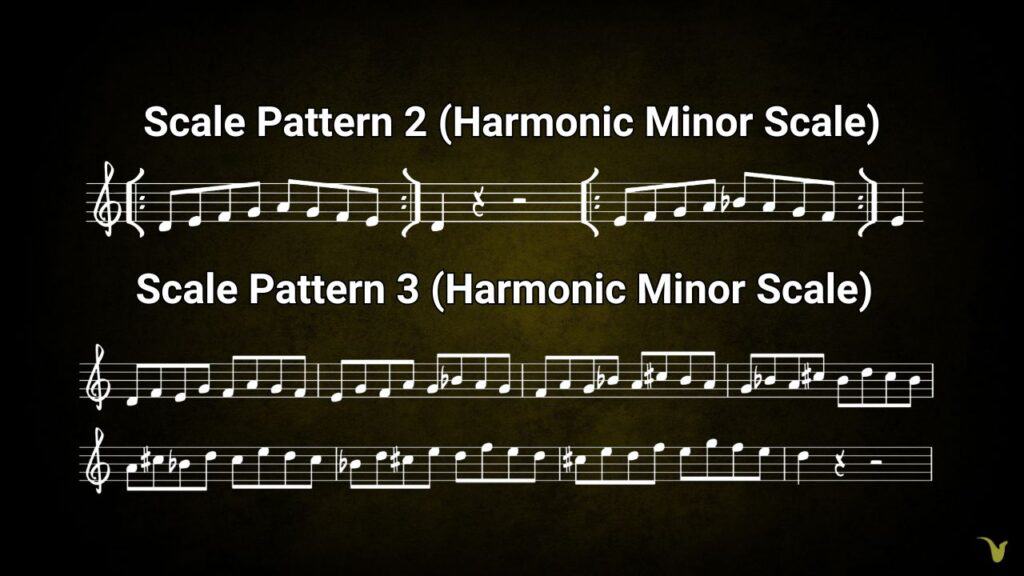
Let’s learn one more pattern that sounds great on the harmonic minor scale and any other scale you apply it to.
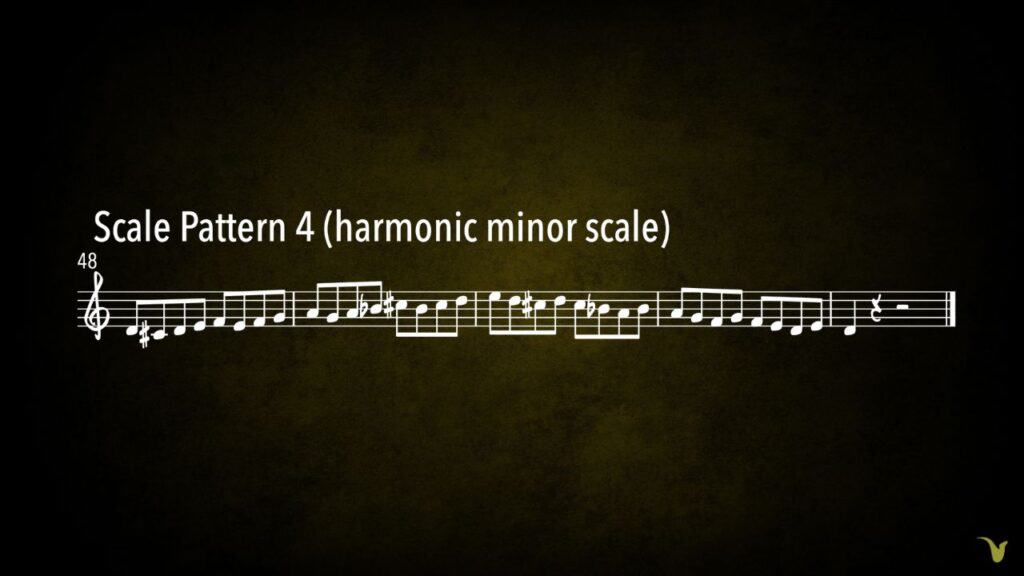
Yes, there are other scales that are good to know, but once you master the three I just showed you, the rest become very easy and most of your scale work is already done. Click here to download the free PDF with all these patterns written out for you.
Once you spend some time practicing them, you are going to want to know how it all applies to playing solos. So go read this article next: ‘Practice Improv Like This and You’ll Nail the Chord Changes‘ where I explain how to practice scales and arpeggios over tunes so you can start playing solos that nail the chord changes.





1 thought on “Practice This Everyday for Fast Saxophone Technique”
Hi Jay
Just getting back into my Alto Sax.
I have an old Conn built in the early 1920’s which needs an entire overhaul to get back into playing condition … so,instead,
I bought a student grade horn just to get back into the swing of things.
I’m awaiting delivery, which should be any day now.
I really enjoy your videos which are teaching me many of the things that I have long forgotten about playing.
Thanks,
Ralph from Philadelphia