
Are you tired of your solo sounding repetitive and boring when you are improvising with the pentatonic scale? There is actually a simple pentatonic trick that instantly makes your solo sound way more interesting without having to learn any new scales.
In this article, I am going to show you how to easily make the pentatonic scales you already know sound fresh and creative in your solos.
Minor Chords
Let us start with the minor pentatonic scale you already know. We can play a D minor pentatonic scale over a D minor chord.
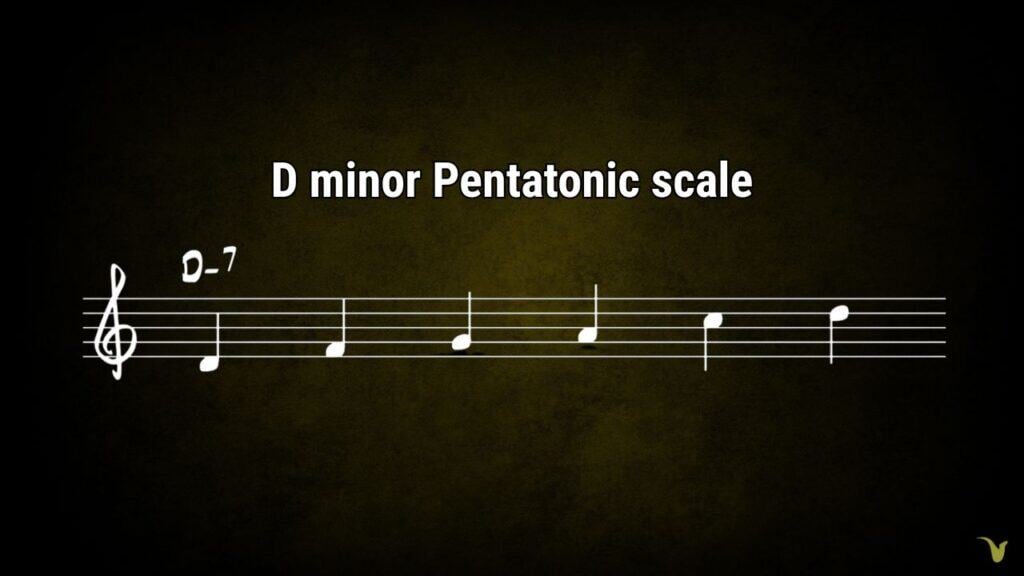
This works great. But after a while, it can get a bit predictable.
So here is a simple trick to add some flavor using what you already know. Instead of starting that scale on the root of the chord D, let us play a minor pentatonic scale starting on the fifth. So in this case, that is A minor pentatonic over the D minor chord.
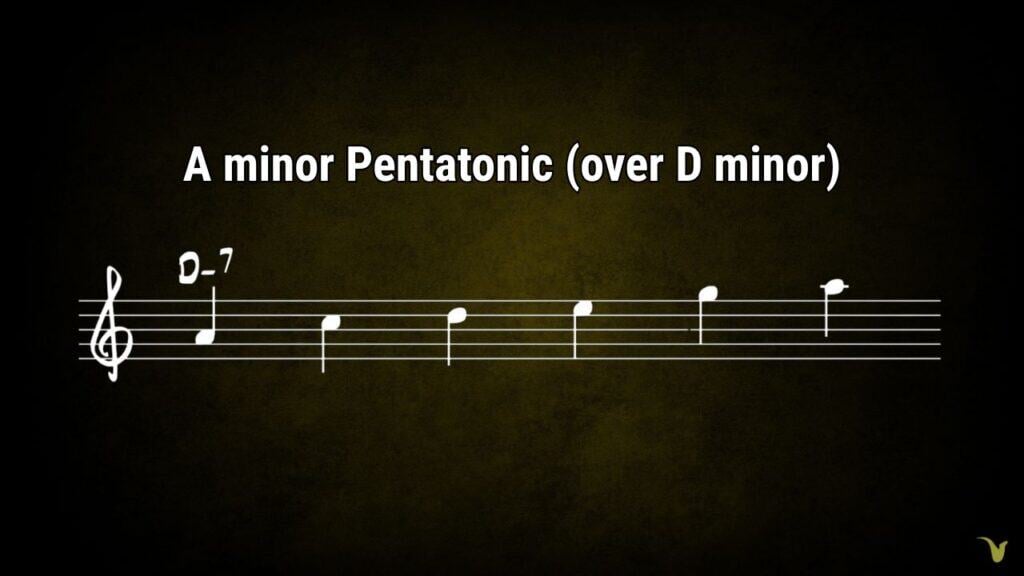
Doing this adds color without getting weird at all.
Notice that the two scales share four notes. The only new note in the A minor pentatonic scale is the E, which is the ninth of our D minor chord. That ninth is a colorful note.
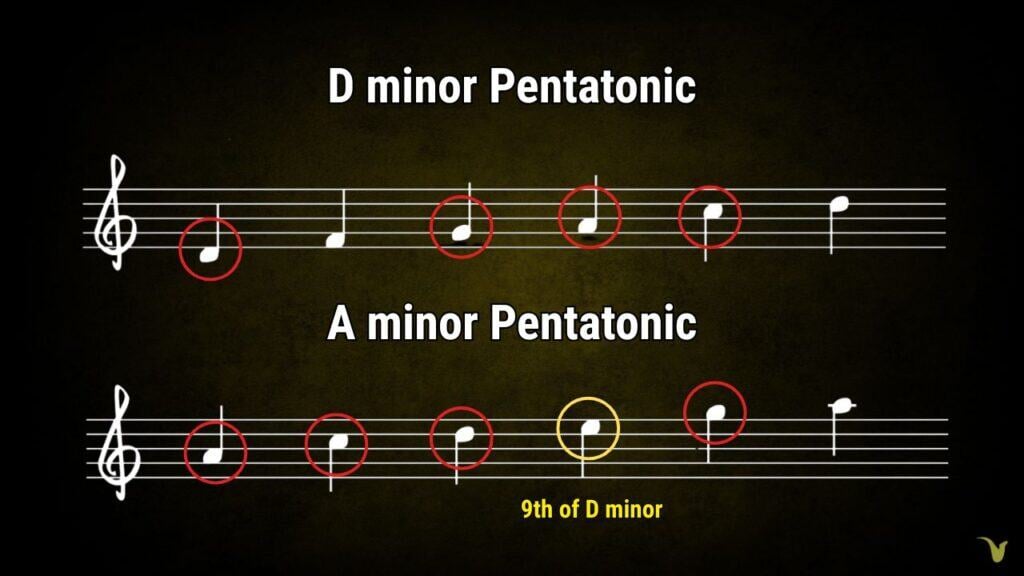
An easy way to use this is to improvise going back and forth between the two scales on a steady D minor chord.
So next time you are improvising over a minor chord, do not just stick to the root scale the whole time. Try using the minor pentatonic scale built on the fifth for a more colorful sound.
Major Chords
This trick works on major chords too.
You probably already know that you can play your major pentatonic scale over a major chord, and every note works.
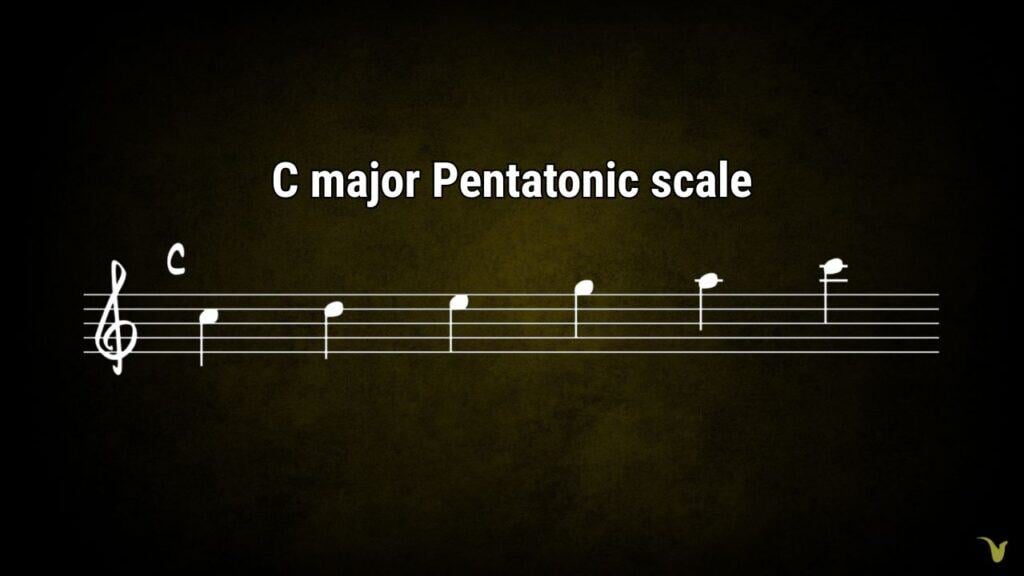
There is nothing wrong with that. But if we want to avoid sounding a bit stale, let us apply the same formula.
We can play our major pentatonic scale starting on the fifth over our major chord. In this case, that is G major pentatonic over a C major chord.
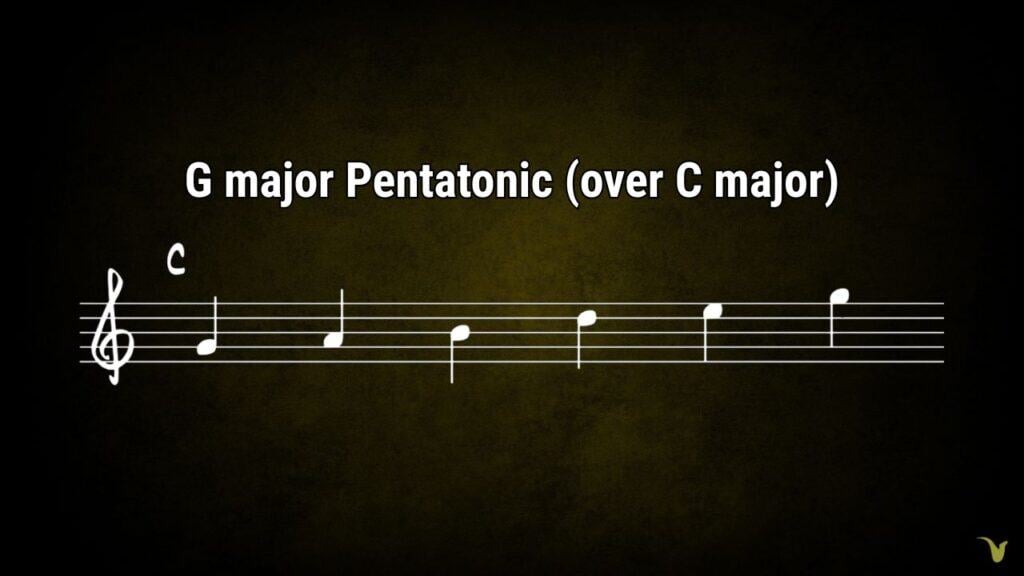
Again, these two scales share four out of five notes. The only new note is the B, which is the major 7th of that C chord. This major 7 adds color and flavor while still sounding very consonant.
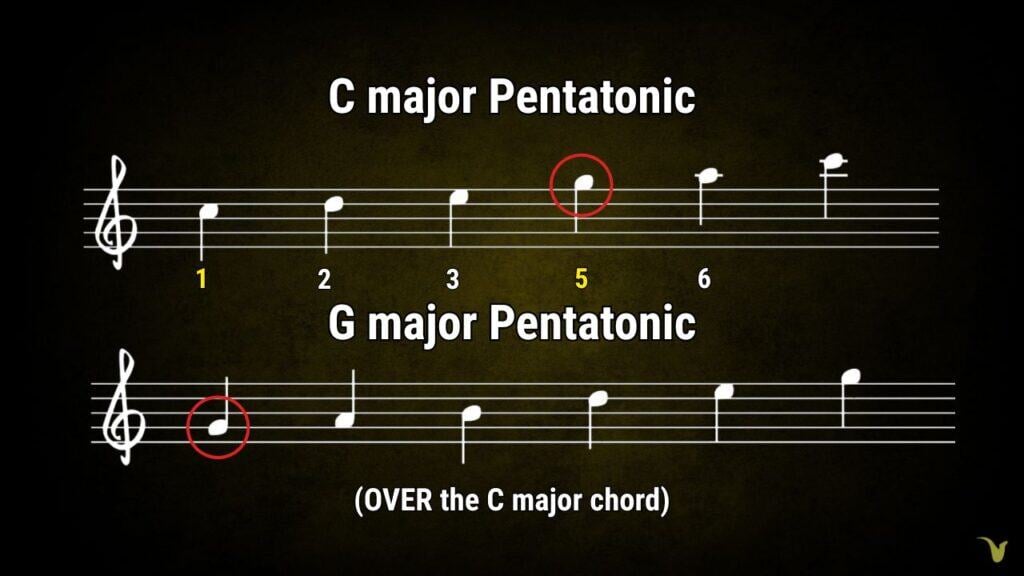
You can make your soloing sound fresher by switching back and forth between the two scales.
So next time you are improvising over a major chord, try using the major pentatonic scale that starts on the fifth.
Now there is one very important thing to look out for when you use this method to avoid sounding like you are just running scales up and down.
Before we continue, we have opened up the BetterSax Membership for a free trial. If you want to seriously improve your saxophone playing while feeling motivated and having lots of fun, click here to sign up now and try it out.
Play With Intention
It is very easy to fall into the trap of just playing the notes of the scale at random without any consideration for how each note relates to the chord.
Each note of the scale has its own vibe. Some notes feel very resolved and home, while others feel like they are going somewhere.
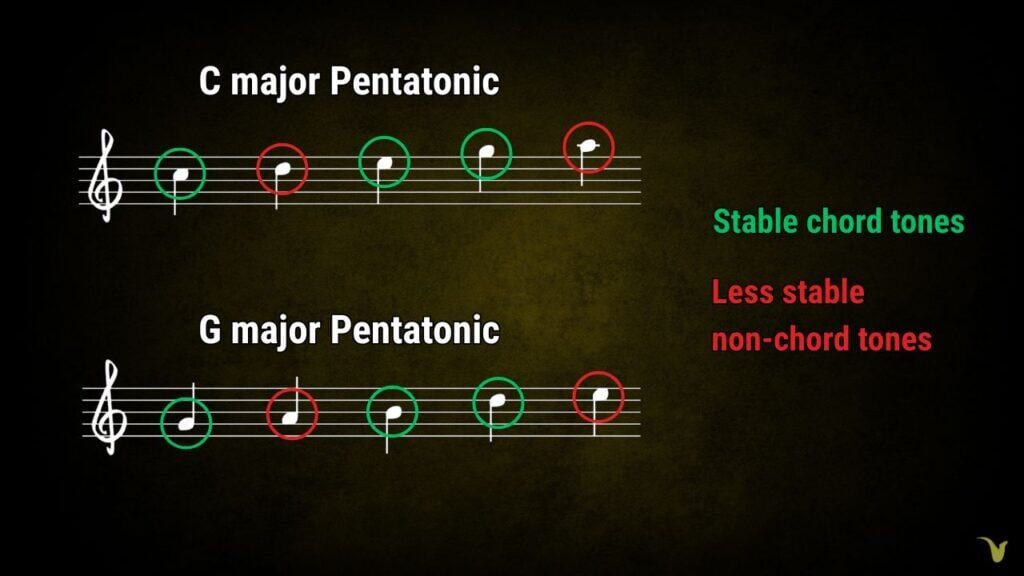
For example, on that C major chord, the notes that sound very stable are C, E, and G, the main chord tones. When you are improvising, no matter which scale you use, if you end your phrases on these notes, your lines are going to sound much more intentional and coherent.
On the other hand, the notes A, B, and D sound less settled. You can still end phrases on them, but it gives your lines a more open ended vibe.
That is why it is so important to be intentional with your note choices, especially at the end of a phrase. When you end on a color tone, it needs to be done with intention to avoid sounding random.
Dominant 7 Chords
There is one more really common chord type we have not talked about yet, and that is dominant seven chords.
You may know that you can play your G dominant pentatonic scale over a G7 chord, and it fits perfectly.
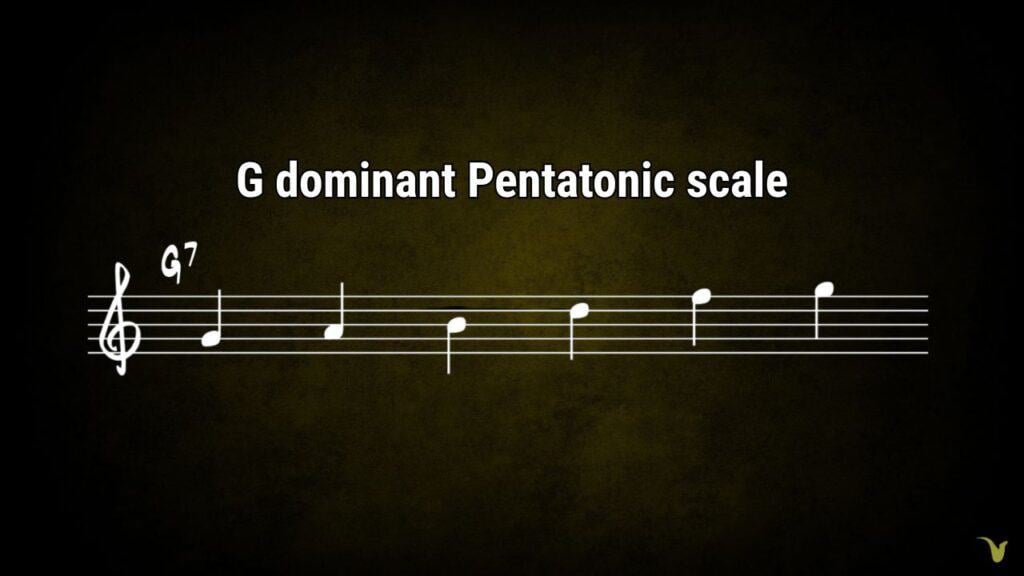
That is a great sound that already has a color tone in it, the ninth.
Another pentatonic scale choice to try over dominant seven chords is the minor pentatonic scale that starts on the fifth. In this case, that is D minor pentatonic.
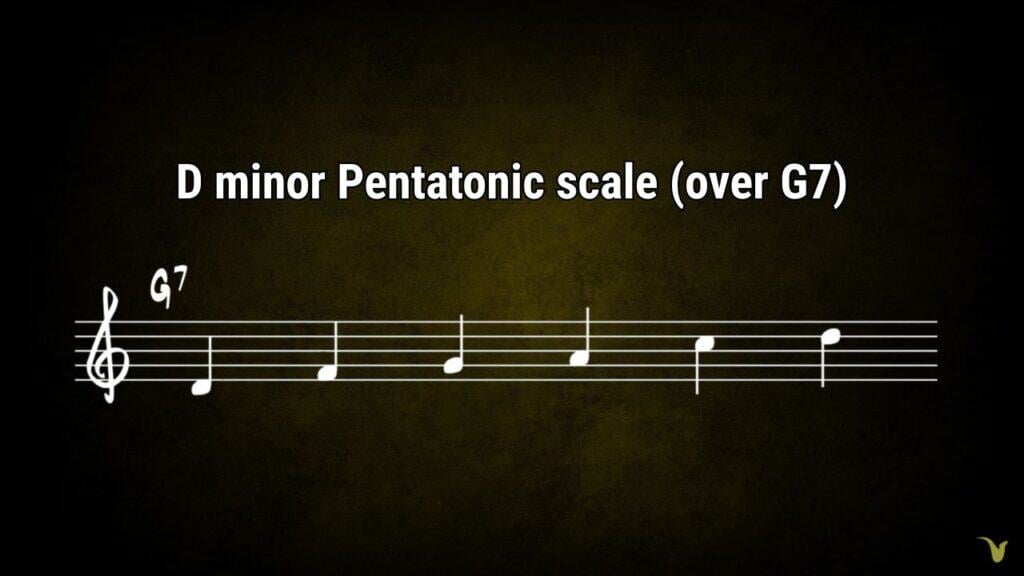
This scale also shares four notes with the dominant pentatonic scale built on the root, but we are adding in the C, or the fourth, to give us this nice suspended color over our dominant seven chord.
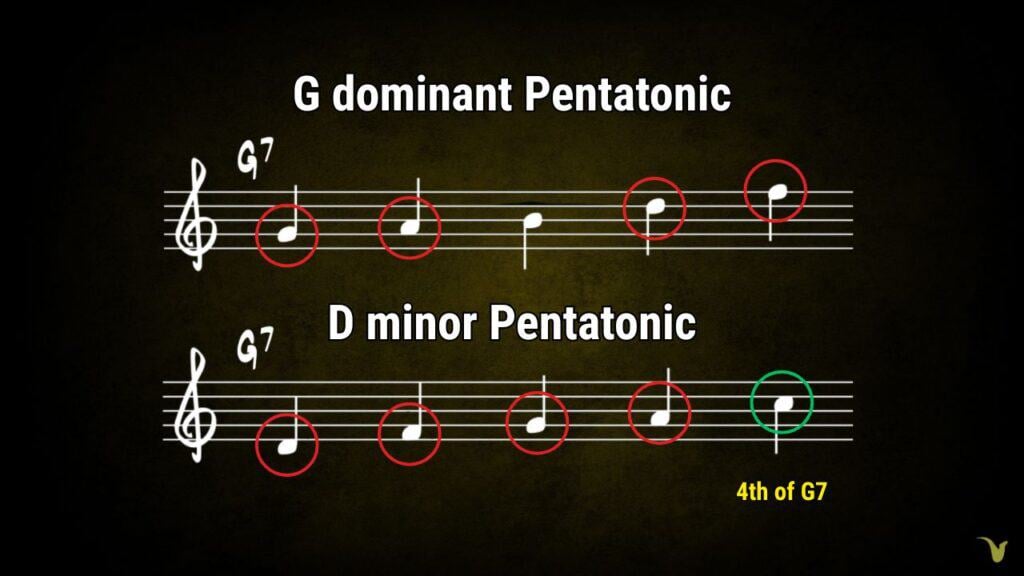
If you alternate between these two scales when soloing over a dominant seven chord, it will sound more interesting.
Applying This to a ii – V – I Progression
So far, you now have two pentatonic scale options to use over each of the three most common chord types: minor 7, major 7, and dominant 7.
In music, you will find these chords both on their own and grouped together in common progressions like a ii – V – I.
This alternate pentatonic scale trick works just as well over chord progressions as it does over static chords.
To apply it clearly, decide in advance which pentatonic option you will use for each chord.
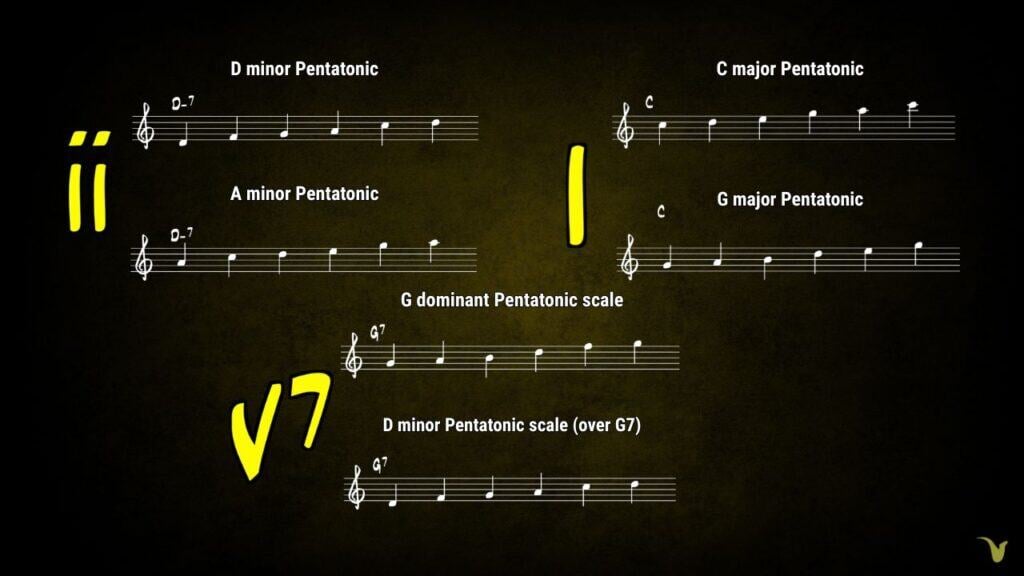
On the ii chord, you can use either the minor pentatonic built on the root or the fifth. For example, over a D minor chord, you might choose D minor pentatonic.
On the V chord, you can use either the dominant pentatonic built on the root or the minor pentatonic built on the fifth. Over G7, you might choose D minor pentatonic, which keeps the sound consistent across the first two bars.
On the I chord, you can choose between the major pentatonic built on the root or the fifth. Over C major, using G major pentatonic adds color while still sounding stable and connected to the harmony.
Of course, we can make other pentatonic scale choices for each chord in our progression.
There you have it. By using pentatonic scales that you already know, you can quickly start playing fresh new ideas to make your soloing less predictable and more interesting.
This works over static chords as well as busier chord progressions.
If you want to develop your technique so you can play these pentatonic scales smoothly with solid rhythm, read this article next where I give you 10 awesome practice patterns that will get your fingers moving faster and your solos flowing.