
Does saxophone lacquer actually make a difference to the sound?
This argument has been raging for years so we did a blindfold test for 50 advanced players on 3 identical saxophones with different finishes…Do they all sound the same, or are there differences in tone? In this video we try to put the myth to rest once and for all.
Spoiler alert… We did not expect the results we got at all.
There’s really only one event in the world where you can get more than 50 high level saxophone players in the same room for something like this and that is the NASA conference. No, not that NASA. Although, there have been astronaut saxophonists. I’m talking about the North American Saxophone Alliance Biennial conference which we attended last month.
It’s a gathering of the biggest saxophone nerds from all over the world for a weekend of performances, gear testing, presentations and camaraderie around what we all agree is the coolest instrument ever.
We wanted to show off the new BetterSax Session altos in a fun way so we set up this lacquer myth-busting event and presented it to a standing room only crowd of accomplished saxophonists.
Our friends Zach Shemon and Robert Brooks volunteered to play the horns for us while blindfolded and hidden from the listeners.

The audience had a survey of questions to fill out anonymously and we collected the data which I’ll share with you in a bit.
Each of these saxophones is made out of the same brass and has a different finish coating, but it’s not just the color that changes. There’s a different process to get each look, and that’s the variable that may or may not cause a variation in tone. I’ll tell you more about those processes later, for now, let’s jump into the experiment.
First we asked the participants 3 basic questions.
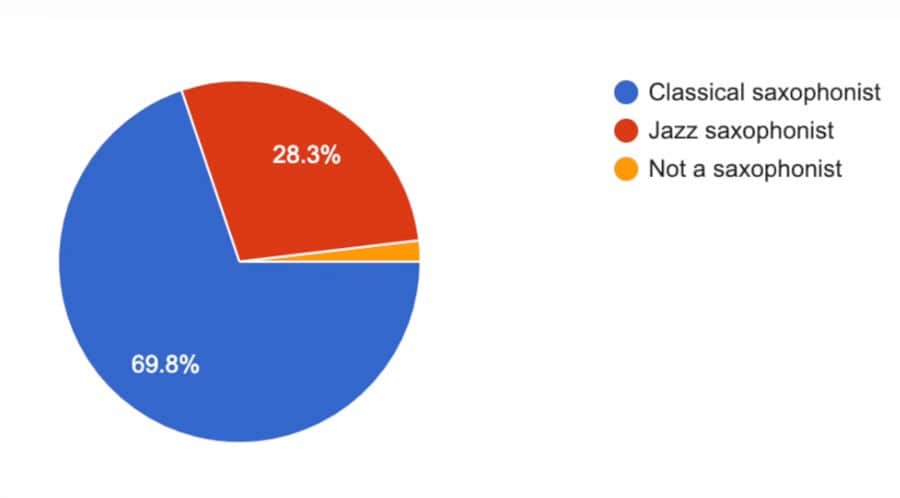
Question 1: What Best Describes You?
37 were classical saxophonists while 15 identified as jazz players. There was 1 person who did not play the saxophone and I don’t know who let them in. (kidding)
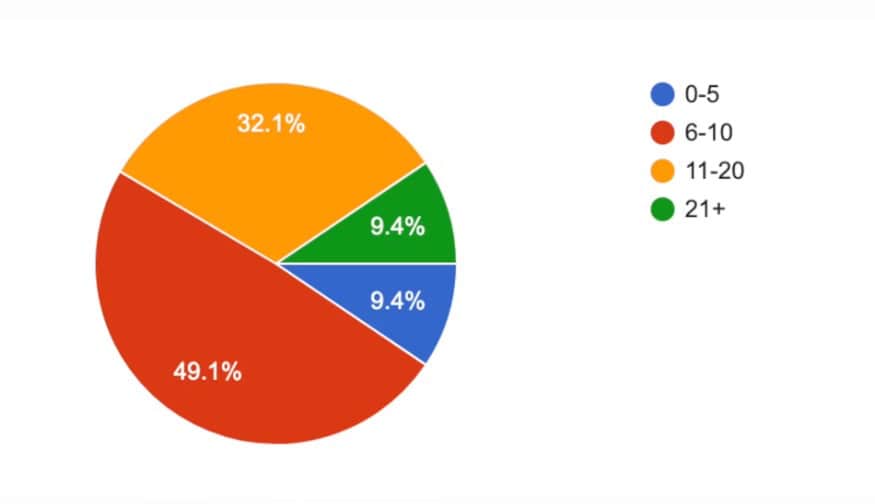
Question 2: How Many Years Have You Played the Saxophone?
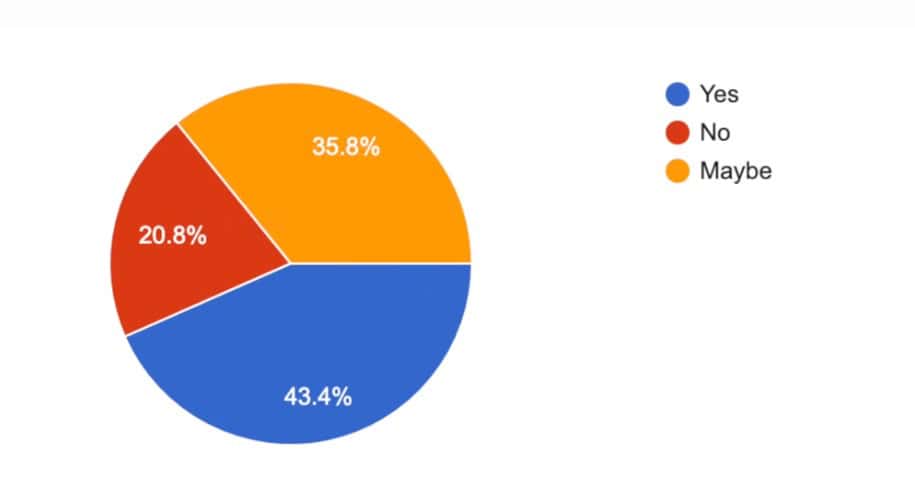
Question 3: Before this test, do you believe saxophone finish affects tone?
This was super interesting. At this point, most people are in the maybe or no camp, with only 43% saying yes confidently.
Let’s start our double blind test, and see if anyone changes their mind.
Classical Test
Zach Shemon is the alto saxophonist in the world renowned PRISM quartet and professor of saxophone at the Kansas City Conservatory. Zach played the same selections on each of the 3 mystery finishes of the Session alto. Zach’s playing is extremely consistent in these examples, and he gave us material in three different dynamic ranges.
We have some jazz examples coming up, but after listening to Zach’s playing, we asked the participants to answer more questions.
Which finish sounded brightest to you?
Go ahead and tell us in the comments which one you thought was brighter? Here’s what our group thought.
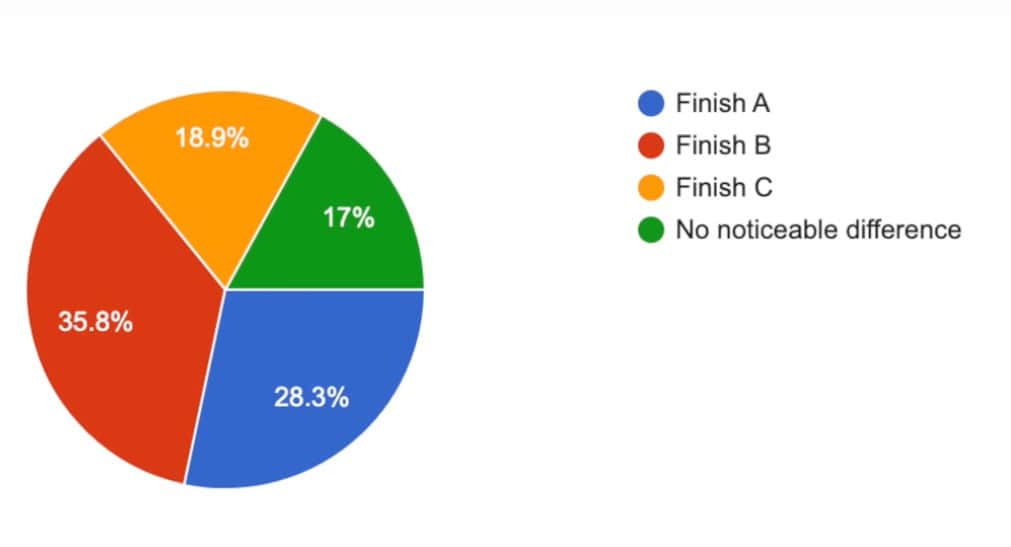
B was a clear winner here, but the results were still pretty mixed.
Which finish sounded darkest to you?
Go ahead and add to your comment below which of the 3 finishes sounded darkest to you.
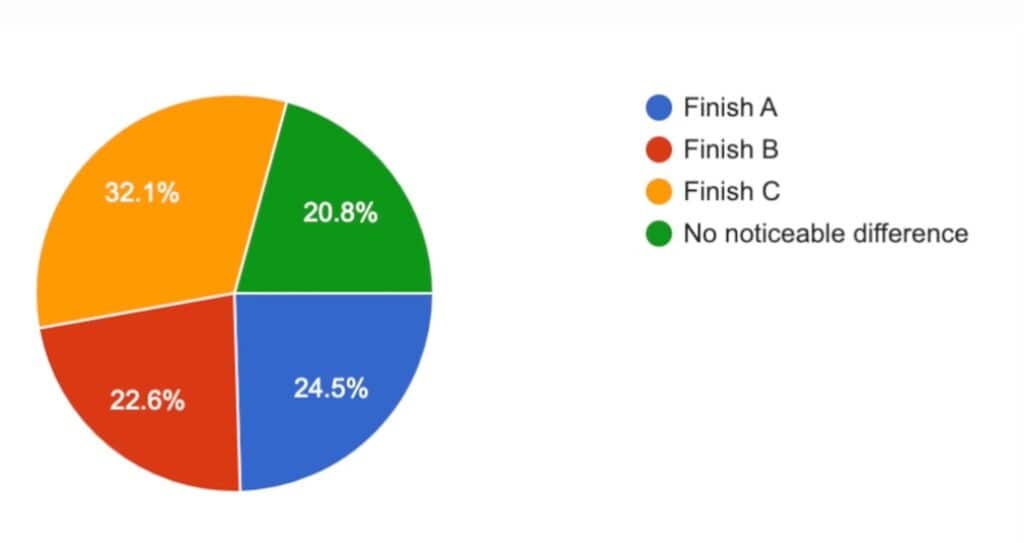
This time it’s a more even split between all three finishes and those who heard no noticeable difference. In the room, nobody has seen any of these results yet though. I’m going to reveal to you which horn was which in a minute but not before we hear our jazz play test which got some very convincing results.
Robert Brooks, Professor of jazz saxophone at Ohio State University received some very convincing results when play testing the horns. Listen carefully, What do you think? Once again, the same questions.
Which finish sounded brightest to you?
Add your answer in the comments!
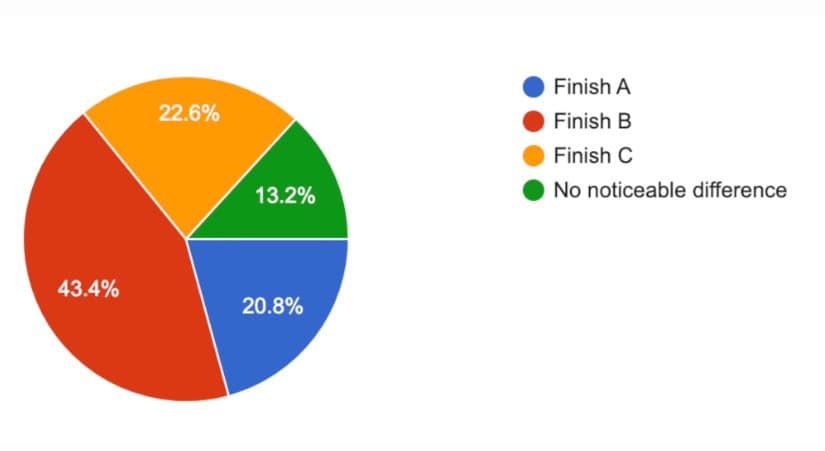
Almost half chose finish B here.
Which finish sounded darkest to you?
Go ahead and share your answer in the comments.
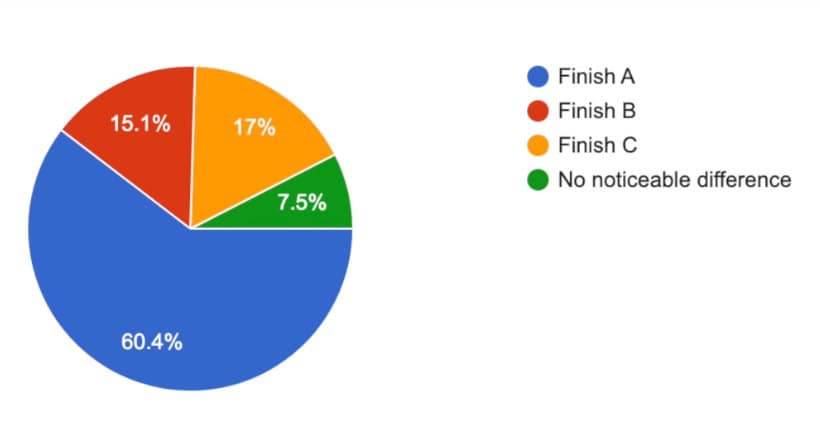
This time more than 60% agreed that finish A was the darkest sounding! So the jazz play-test seemed to make it easier to hear a difference.
The Results
We asked everyone to tell us which finish they thought was which before we revealed the answers. I want to know what you think before I tell you. Let us know in the comments which order you think we played these 3 finishes in? If you had to guess, which finish do you think sounds the brightest and which sounds the darkest?
Here’s how are participants guessed:
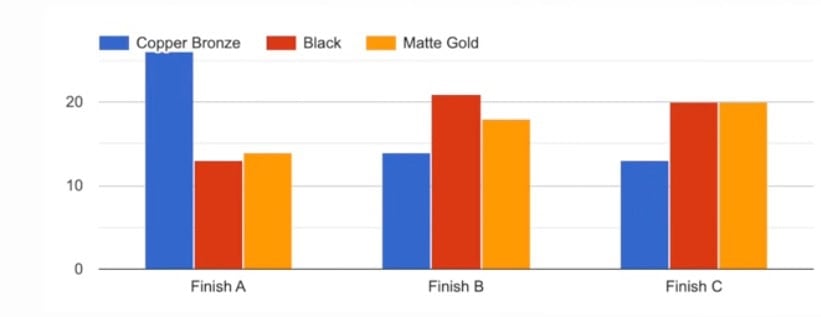
More people associated the darkest sound with the Copper Bronze finish and the brightest with the Bond Villain Black. What’s interesting is that the reality was the exact opposite.
Here’s the order for both tests:
Finish A was Black, finish B was copper bronze, and finish C was matte gold. It seems to me that there was some pre-existing bias that a black saxophone would be brighter and a bronze colored saxophone would be darker.
What Makes Each Finish Different?
These saxophones are extremely precise and consistent. I know because I’ve played through dozens of them in testing sessions at the factory. The only difference between these instruments is the processes we use to get these beautiful finishes.
Our Bond Villain Black Matte finish has 3 layers. First, the horn is plated with black nickel, then there is a layer of traditional spray black lacquer applied, and finally there is a clear matte lacquer on top.
The dark matte gold has 2 layers. First a dark gold spray lacquer and then a clear matte lacquer on top.
The copper bronze finish uses a completely different technique. Instead of the traditional spray lacquer that is used on almost all saxophones these instruments are lacquered with a method called electrophoretic coating.
This is essentially similar to the way we would apply silver or gold plating to an instrument. The parts are placed in a bath and then electricity is used to bond a layer of lacquer on. This process results in a very thin, even and durable coating. We then apply a standard clear lacquer on top of that.
Once we know all that, it does make sense, to me at least, that the copper bronze finish which has the thinnest coating would result in the brightest sound, while the black matte which has 3 layers would be darker. Keep in mind that typically saxophones have multiple layers of spray lacquer on them.
What We Learned
We have had a number of artists test all 3 finishes of the Session alto. However, this was the first time with a classical player on a classical mouthpiece and reed setup. The differences were much more pronounced in the jazz playing. Perhaps this means that the classical saxophone sound is less influenced by the instrument itself than the jazz sound.
Maybe the purity and consistency of Zach’s tone mask or overcome any subtle differences the finish might provide.
Both Zach and Robert, said they noticed a difference between the horns and agreed on which one played darker or brighter.
We consistently hear that the Black is darker, the copper bronze is brighter and the matte gold is between the two. This is supported by the survey results, although it’s also clear that the player notices the difference more than the audience.
The preferred sound varies according to the individual. Some people like the sound to be more on the bright side, while others prefer a darker sound or something in between.
Based on sound alone, which would you choose?
Before giving the results we asked the group to tell us which horn they preferred based on sound alone. The copper bronze finish, which is usually considered the brightest, was the clear winner here. This doesn’t surprise me either since I have found that people consistently prefer the brighter choice in my many online play tests.
But what about the difference between a lacquered horn and one with no lacquer at all? Why do we put the paint on there anyway? Go check out this blog next where I explain why lacquer is so important. It’s probably not what you think.