

We sat down with saxophonist Chris Potter, widely regarded as one of the greatest living voices on the instrument, for a rare and generous interview filmed in Hangzhou, China at the Good Cha Jazz Club. Watch the full conversation above, or keep reading for a breakdown of what Chris shared about practicing, learning jazz by ear, and the players who shaped his sound.
How we got an interview with Chris Potter
Chris Potter rarely does long-form interviews, and his schedule leaves little room for them. Getting this conversation was a challenge, and it only came together because we happened to be in China at the same time. If you want to help us land guests like this in the future, subscribing to the BetterSax YouTube channel genuinely makes a difference. It is the number one factor that opens doors with players and management teams who otherwise say no.
How Chris Potter Actually Practices Saxophone
One of the most surprising moments in the interview is Chris admitting he has never had a fixed practice routine.
“I always had the feeling that I don’t know how to practice. I never had a routine. I always kind of felt like I was just messing around, but that’s what seemed to work.”
Instead of structured drills, Chris describes a process built on deep, repeated listening and copying his heroes note for note.
“The most important thing for me when I was learning on my own was to copy other players. You have to figure out what the notes are, what the form is, what the harmony is. But then getting to the point where you can imagine why he’s making those decisions and why that sounds so good, that’s getting into the inner game of it.”
If you are looking for a more structured way to build that same ear-first foundation, our Standard Studio courses walk through exactly this kind of listening and transcription process, step by step. Part of the BetterSax Membership.
Learning Jazz as a First Language, Not a Second Language
Chris draws a sharp distinction between studying jazz like a set of rules and absorbing it the way a child absorbs their native language.
“There’s a lot to be said for learning the jazz language as a language, not as a second language, but as a first language. You don’t wander around as a kid thinking about how to conjugate verbs. You just hear people talk, and then you copy them, and you make up your own sentences.”
He is quick to admit this approach is inefficient compared to a method-based path, but he believes that inefficiency is part of what makes the language feel personal rather than borrowed.
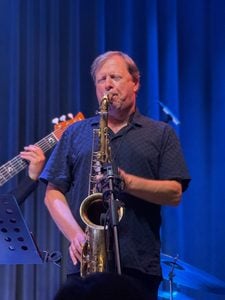
The Musicians Who Shaped Chris Potter’s Sound
Chris credits his growth less to saxophone players specifically and more to the rhythm section giants he had the chance to work alongside, including Dave Holland, Herbie Hancock, McCoy Tyner, and Jim Hall. Watching how they reacted to his playing in real time, not just hearing them on record, taught him how personality and background shape a musician’s voice.
Chris Potter’s Biggest Strength and His Biggest Challenge
Asked what came naturally to him, Chris points to time feel, something he says is nearly impossible to teach. Asked what still challenges him after decades of playing, his answer might surprise you: sound.
“Sound is something I’m still working on. Before you play anything complex, if it’s not just this beautiful, compelling sound, like when you hear Sonny Rollins or John Coltrane or Johnny Hodges or Cannonball, it just goes straight through you.”
Charlie Parker, Lester Young, Sonny Rollins, or Coltrane: Chris Potter Picks His Biggest Influence
We asked Chris which players had a bigger influence on his playing, and his answer might come as a surprise to some.
“If there’s a central figure for me, I’d say it’s Charlie Parker. When I feel like I’m lost, it’s a bit like, well, what would Charlie Parker do?”
Live Performance vs. Studio Recording
For Chris, there is no contest between the stage and the studio.
“As an improviser, it’s all about what’s happening right at that moment.”
He describes recording as a kind of document, useful but artificial, while live performance is where the real connection happens.
Watch the Full Interview
This summary only scratches the surface of a wide-ranging conversation. Watch the full interview at the top of this page to hear Chris Potter talk in his own words about growing up in Columbia, South Carolina, becoming a father, and what keeps jazz feeling endless after decades of playing.
If this conversation inspired you to work on your own sound and vocabulary, explore our full lineup of jazz saxophone courses and join the BetterSax membership for structured, ear-first practice built around real jazz language.





1 thought on “I Asked Chris Potter How He Mastered the Saxophone.”
At 77yrs. I think your interview with Chris Potter was plain and simple. Potter described his journey to greatness. I finished the interview feeling relative to his experience. He’s playing for the UNIVERSE. 🙏🏽🌈🎷🚴🏾♀️🪘☮️🌴👍