

Why don’t more alto players play on metal mouthpieces?
Let’s face it, most metal alto pieces are built for a bright, punchy sound, but not versatility. So, in the video above, I give you a behind-the-scenes look at how I teamed up with Jody Jazz to develop a metal alto mouthpiece versatile enough to make hard rubber players seriously consider switching.
This is the sixth mouthpiece design that I’ve collaborated with Jody Espina on. Last year, we made the burnin’ metal tenor mouthpiece, which came out incredible after a lot of hard work. The logical next project was the Burnin’ Metal Alto.
But there’s a problem. By far, most alto players prefer hard rubber mouthpieces.
“You know that tenor players split at least evenly between guys who like metal and guys who like rubber, but alto is not split evenly at all. It’s 70/30 at best”
Jody Espina
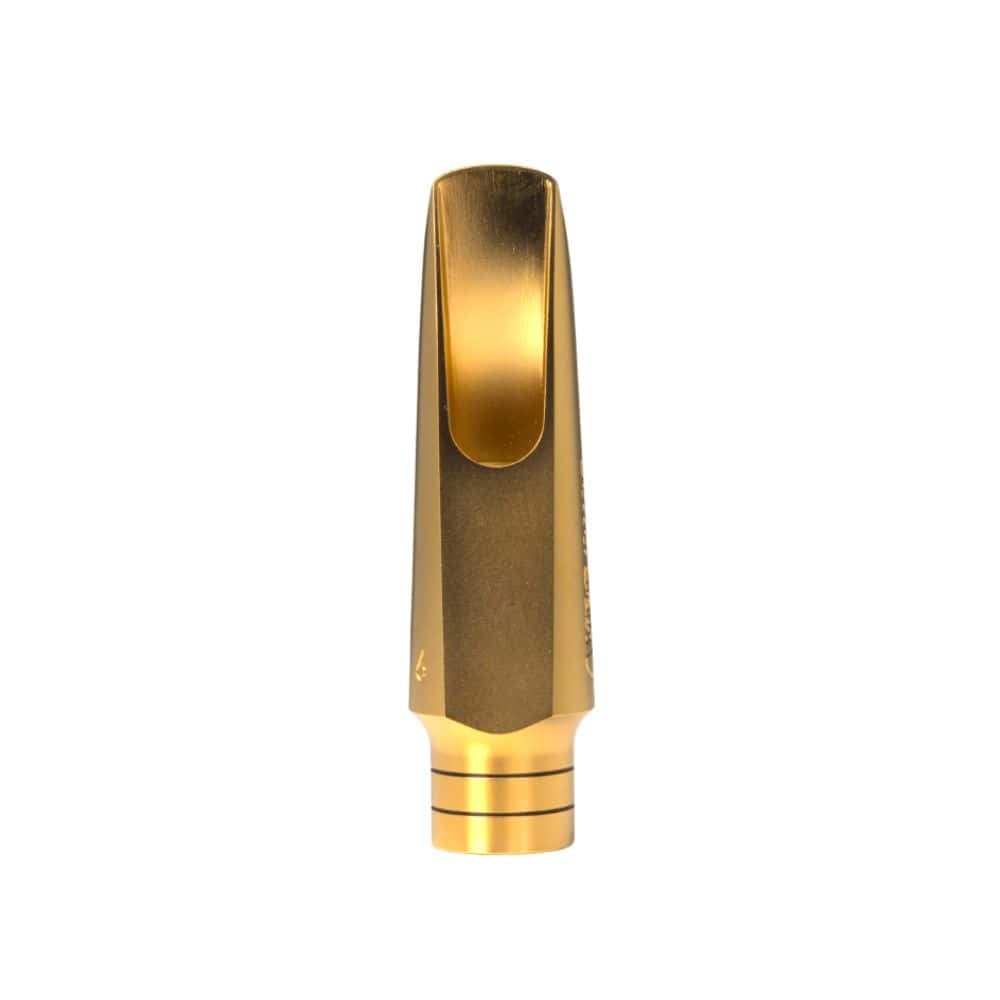
Why do alto players avoid metal mouthpieces?
So, I asked Jody, who knows more about mouthpieces than pretty much anybody, why he thinks that is.
- First, if you think about some of the most famous tenor mouthpieces, nobody plays the alto mouthpiece of that. And that’s because that alto mouthpiece doesn’t play good.
- Number two, metal mouthpieces were traditionally made to screech, to be really bright, and alto players would play them, and they go, “Oh, it sounds terrible. It’s like nails on the chalkboard.”
- And the third reason, the size we make metal in is smaller in the mouth and Alto players feel like they’re not used to that. So, that feels uncomfortable.
Going into this, I didn’t want the burnin’ metal for alto to be too bright.
There’s already a lot of great options in that category. I wanted to give Alto players who love the burnin’ hard rubber piece the same versatility… just in metal. So, we got to work.
Jody and his team had been working hard leading up to my visit to get some good prototypes for me to play test. Since we already have the baseline of the hard rubber as a starting point, the job is much easier than if we were starting from scratch. First step for me is going to be getting point of reference compared to the hard rubber burnin’ mouthpiece.
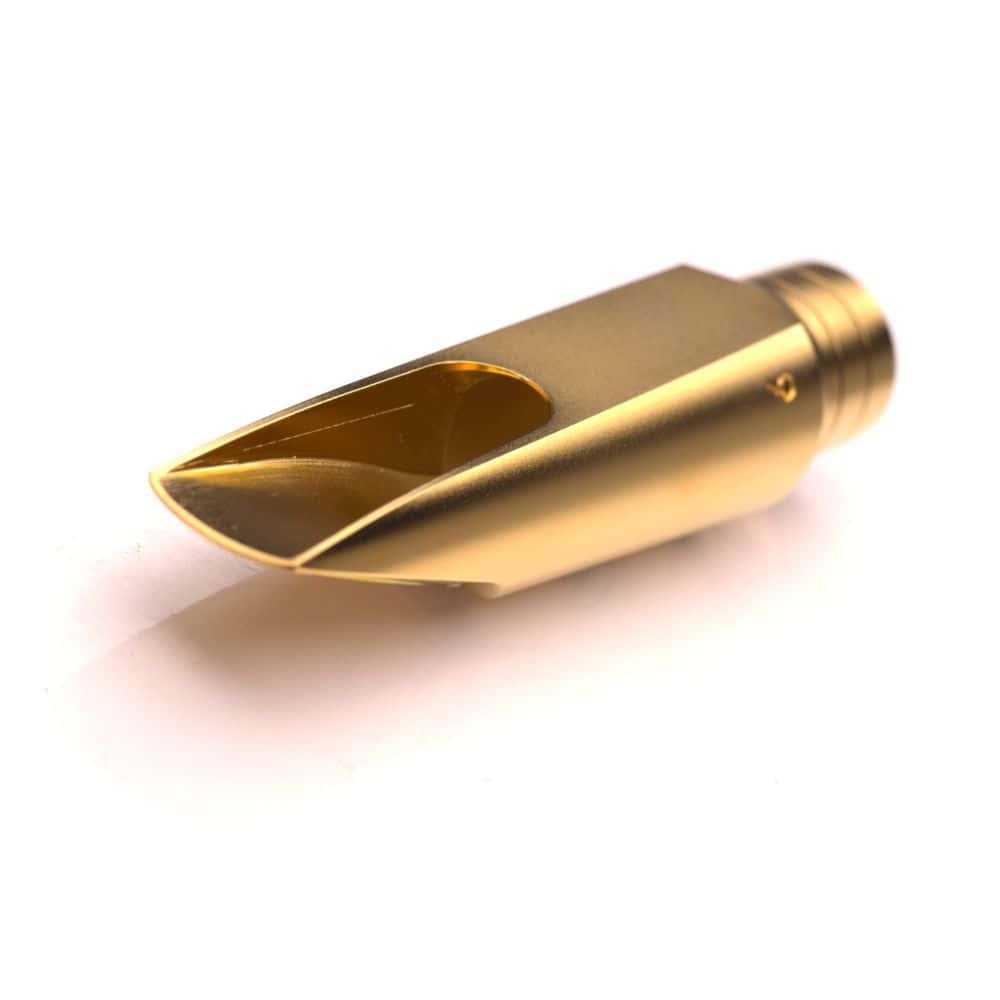
A Metal Alto Mouthpiece Design That Will Make Players Switch From Hard Rubber
I tried all the the metal piece prototypes that Jody provided me with. When making a new metal version of a great hard rubber mouthpiece, it’s very important to compare back and forth as you go. The goal is to capture what we love about the original and just enhance it a bit. Zach from Jody Jazz is the engineer in charge of making changes to the designs by programming the CNC machine. He’s also an expert in hand finishing mouthpieces, and he’s a key part of the whole process.
Once all three of us decided which of Jody’s prototypes were most in line with what we were going for, we realized something. Maybe this could be a a a metal mouthpiece that makes more players play metal. You know what I mean? That aren’t smooth jazz. If they didn’t have a prejudice and they just tried it. It plays like a great straight ahead mouthpiece. It’s not usually that fast to get the final prototype, but this one was just so good there was no doubt. But the work is not finished. So far, we’ve been testing only the seven facing. Next, we have to finalize facings for the five and six tip openings.
Finishing the Mouthpiece Design
The next morning, I came to the factory and was greeted by a freshly made mouthpiece with our artwork. This is another important part of the process, making sure the logos, lines, and finish are exactly how they need to be.
The burnin’ metal has a fine sand blasted treatment that looks even better once it’s gold plated. Once the artwork is finalized, we make another final prototype. We start out with our fatter blank made out of solid brass that goes into this five axis CNC machine and the new program is loaded up.
The artwork gets done first and now the rest of the mouthpiece gets cut and drilled out very slowly to ensure the highest precision possible. Zach then takes care of hand finishing the interior tip, baffle, and sidewalls.
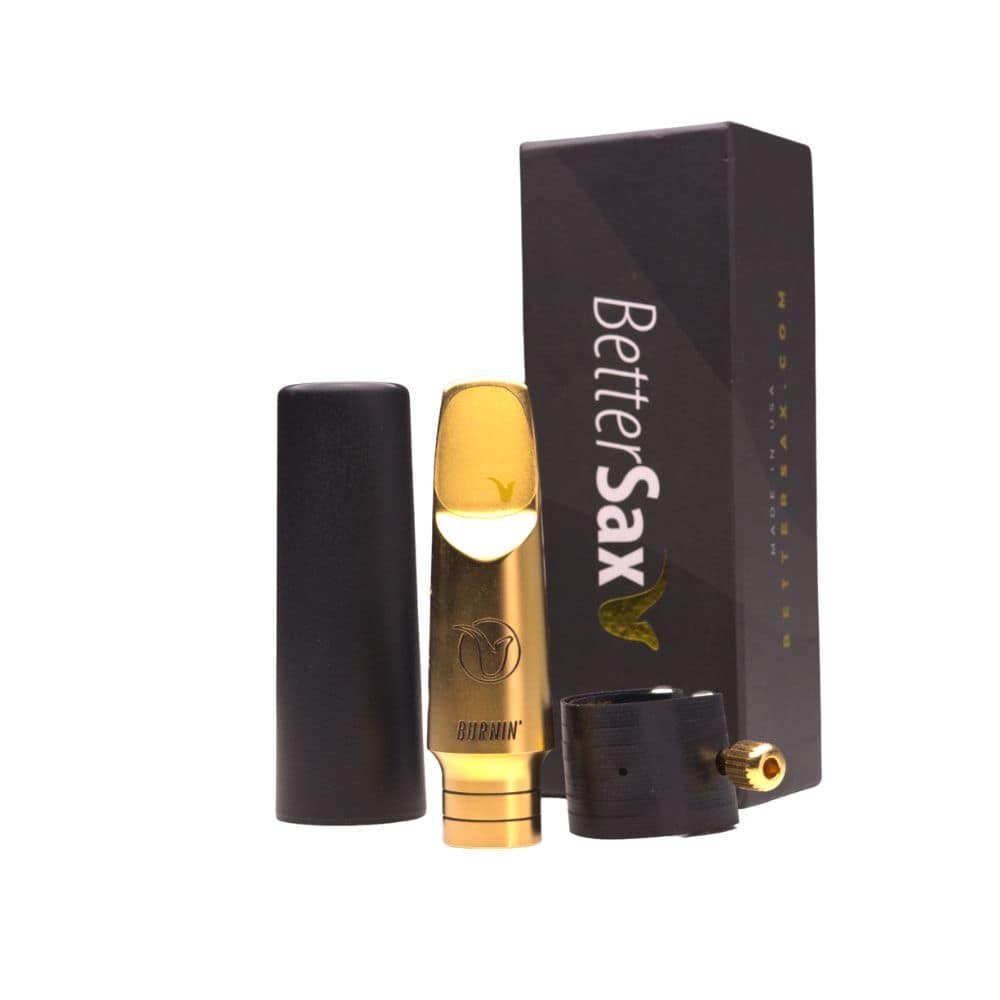
The final result is gorgeous.
The last step in the process is the hand painting. And now we have a finished burnin’ metal alto mouthpiece in three tip openings ready to hit the market. There’s a lot more that goes into the process of designing and making a great mouthpiece. I only explained the most interesting parts.
What I want you to know is that this is the metal alto mouthpiece I’ve been waiting for my whole life. It plays as easily as my best hard rubber mouthpiece, but offers more power and resonance with no extra effort. It plays at low volume with incredible ease and can handle a ton of air.
I still love my burn-in hard rubber, but this one is my new go-to alto mouthpiece for everything. I could play straight ahead, jazz, ballads, pop, funk, big band, anything at all and feel totally comfortable. This mouthpiece comes with a ligature and cap, and is now available worldwide.
I play the seven tip opening with a two and a half jazz cut read
But the five and six facings are also killer and you can’t go wrong with any of them. I would just increase my read strength for the smaller tip openings.
Alto saxophone players have largely avoided metal mouthpieces in the past, but I think this burnin’ metal will help convert a bunch of hard rubber loyalists.
It’s weird that for tenor saxophone, metal has widely been considered superior to hard rubber, so go watch this video next to find out why that is and if it’s even true, watch this video.





3 thoughts on “The Problem with Metal Alto Sax Mouthpieces”
I love my Burnin Alto hard rubber 7 that I use with Plasticover 2s. I double a lot, and can’t deal with regular reeds drying out too much. Question is, will this new metal MP sound way too bright with my Plasticovers?
thanks!
Hi Ron, thanks for the kind words about the Burnin’ HR mouthpiece. Whether the metal version will be way too bright with Plasticovers has a lot more to do with personal preference, what kind of sound you’re going for, and especially the person playing the mouthpiece. But like all of our mouthpieces, the metal version is extremely easy to play. And when you don’t have to fight the equipment, it gives a lot of freedom to shape the sound to your concept.
Jay,
The versatility of the Burnin’ Metal Alto mouthpiece sounds like it comes from a Medium Sized chamber. Is that correct?
I realize the differences between an Alto and a Soprano, and that very minor changes in not just playing, but in instrument and mouthpiece design, have very major affects on a Soprano.
Being that stated, can you create a Burnin’ Metal Soprano mouthpiece that has the same character, timbre, range, and sound quality as the Burnin’ Metal Alto mouthpiece?
The Selmer Super Action 80 Series II soprano I have has a cork outer diameter of 13.5mm or 17/32 in.
The Super Session mouthpiece I have has an inner diameter of 13.5mm or 17/32 in.
I think that many saxophone manufacturers believe that proprietarianizm secures the sales and use of their products, but the truth is that it just limits the opportunity for any performer to find the right match or combination of instrument, mouthpiece, and reed.
Something you coudl do that would have major exponential affects on the saxophone industry is to create a consortium of all saxophone manufacturers and standardize sax neck outer diameters, mouthpiece inner diameters, and cork thicknesses, so mouthpieces could be more easily experiented with and matched to sax instruments.
If good reasoning could be found, to also encourage standardization of mouthpiece outer diameters and reed stock thicknesses so ligatuares and reeds could also be very easily interchangible and matched.
This would absolutely revolutionalize the saxphone manufacturing industry for the performance and enjoyment of audiences.
Manufacturer List
Gerome Selmer (Selmer Paris)
Nick Hernandez (Dukoff Mouthpieces)
Theo Wanne (Theo Wanne Instruments and Mouthpieces)
Jody Espina (Jody Jazz)
Jay Metcalf (Better Sax)
. . . etc.
(The order was just from memory.)
I just wanted to plant some seeds, and if you produce a soprano mouthpiece with those qualities I would love to know about it.
I hope all is well with you and your business.
Sincerely,
SF